




The Minister of the Federal Capital Territory (FCT), Barrister Ezenwo Nyesom Wike, has reaffirmed the commitment of the FCT Administration (FCTA) to upgrading healthcare delivery and strengthening emergency response services across Abuja and its satellite towns.
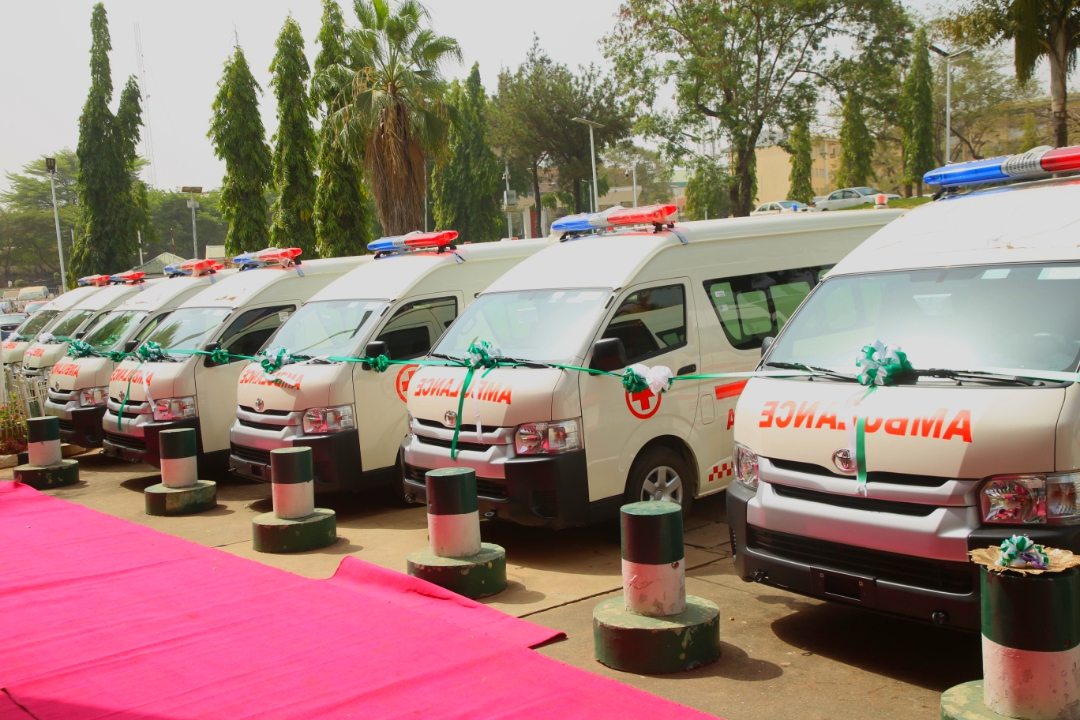
Wike made the pledge on Thursday, January 29, 2026, in Abuja while handing over 12 fully equipped, state-of-the-art ambulance buses to hospitals within the territory. He described the intervention as part of a wider reform agenda designed to ensure that every key sector—health, education, infrastructure, and social services—receives attention under the current administration.
According to the Minister, the ambulance distribution is not an isolated project but a strategic move aimed at improving the survival chances of residents during emergencies and reducing avoidable deaths linked to delayed response or lack of functional emergency transport.
Addressing concerns raised by some critics who had questioned why the FCTA initially focused heavily on road construction, Wike said emergency healthcare cannot function properly without reliable road networks.
He explained that ambulances are only effective when they can move quickly and safely, especially during life-threatening situations.
“People were saying why are we concentrating on roads and not focusing on education or health,” Wike said. “But if you don’t have good roads, these ambulances may break down or get stuck. During emergencies, if roads are not motorable, the entire purpose of emergency vehicles becomes useless. So, first things first.”
The Minister stressed that road rehabilitation and expansion remain essential foundations for effective healthcare delivery because hospitals, ambulances, and patients must all be connected through functional transport routes.
Beyond the ambulance presentation, Wike revealed that the FCTA is currently at the procurement stage for the rehabilitation and furnishing of 14 health centres across the territory. He noted that the goal is to strengthen primary healthcare services so residents can access quality treatment closer to their communities, rather than overwhelming major hospitals in the city centre.
He also confirmed that the FCT Civil Service Commission has been directed to begin the recruitment of additional health workers to address manpower gaps within the system.
The Minister said the administration is determined to fix longstanding weaknesses in the health sector, including shortages of personnel and inadequate medical facilities, while ensuring that the investments being made translate into real benefits for the public.
During the event, Wike also spoke on the recent industrial action involving the FCT Joint Union Action Committee, which was stopped by the National Industrial Court.
He stated that although the government would have preferred negotiation over litigation, it was left with no alternative after appeals to suspend the strike were ignored.
The Minister argued that the administration had already shown willingness to meet workers halfway, but alleged that some individuals with political motives hijacked the labour issue to undermine the government’s work.
Wike warned that the FCTA would not allow any group to destabilise governance or disrupt public services under the guise of labour agitation.
He said the best approach remains dialogue and gradual resolution of demands, especially where government resources are limited.
“If workers demand five things and government says we can take three now and handle the remaining two later, if you are sincere, you will accept,” he said. “But when it becomes political, then we will treat you as politicians.”
He appealed to workers at all levels—junior staff, senior staff, and management—to remain law-abiding, obey court orders, and embrace peaceful engagement for the sake of development in the territory.
Wike further explained that while workers’ welfare remains important, government must also fund major infrastructure projects that benefit millions of residents.
He noted that the FCTA cannot channel all resources into salary-related obligations alone, especially as Abuja is undergoing massive upgrades in roads, public facilities, and social services.
The Minister maintained that the administration remains committed to ensuring that legitimate entitlements are paid, but urged stakeholders to understand the broader responsibility of government to provide lasting development.
Earlier, the Mandate Secretary of the FCT Health Secretariat, Dr. Adedolapo Fasawe, applauded Wike for what she described as people-centred leadership and consistent support for the health sector.
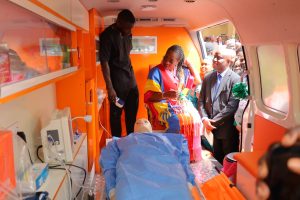
She said the arrival of the new ambulances reflects the FCTA’s seriousness about emergency preparedness and improving health outcomes for everyone living in the territory.
Dr. Fasawe also pointed out that improved roads in places such as Abaji, Kwali, and Gwagwalada have significantly reduced travel time for ambulances and medical teams, helping hospitals respond more quickly to distress calls.
She added that the FCT currently stands out as the only state or territory that has fully paid key medical allowances, including hazard allowances and the medical residency training fund, up to date.
According to her, the ambulance project is one of several coordinated steps being taken to deliver accessible, responsible, and high-quality healthcare across Abuja.
The event also drew support from international health partners. A representative of the World Health Organisation (WHO), Dr. Kumshida Balami Yakubu, praised the FCTA’s efforts to strengthen emergency preparedness and expressed readiness to continue supporting the FCT in achieving its health targets.
He noted that improving emergency transport systems is a vital part of reducing preventable deaths and strengthening public health resilience.
With the handover of 12 modern ambulances, planned upgrades of 14 health centres, and ongoing recruitment efforts, the FCTA says it is building a more responsive and reliable health system—one that can serve residents across the city centre and the rural communities.
The administration believes the combination of improved infrastructure, better-equipped hospitals, and strengthened emergency services will position the FCT for improved healthcare delivery in 2026 and beyond.
