





The Bolt mobility platform has partnered with the Federal Road Safety Corps (FRSC) to promote road safety awareness among driver-partners and delivery couriers operating in Abuja.
The initiative focused on educating drivers on the importance of complying with traffic rules and adopting safer driving habits while operating on the city’s busy road network. The awareness programme is part of efforts to strengthen road safety culture across the Federal Capital Territory (FCT) and encourage drivers to prioritise safety during every trip.
Organisers explained that the sensitisation campaign was designed to deepen knowledge of traffic regulations among professional drivers and ensure that they remain conscious of their responsibility to protect passengers, pedestrians, and other road users.
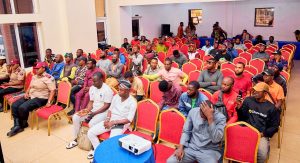
The programme brought together Bolt driver-partners and couriers for practical training sessions aimed at improving road safety compliance in the capital city. Participants were encouraged to respect traffic laws and maintain responsible conduct while driving.
Officials involved in the initiative noted that improving road safety requires continuous education for drivers, especially those who spend long hours on the road providing transport services to the public.
The training sessions were therefore designed to equip participants with practical safety knowledge that can help reduce accidents and enhance commuter confidence in urban mobility services.
Speaking during the event, Bolt’s Head of Regulatory and Policy for Africa, Ms Weyinmi Aghadiuno, said safety remains a central element of the company’s operations.
According to her, mobility platforms must go beyond technological solutions and implement practical measures that support drivers and protect passengers.
She explained that partnerships with regulatory agencies like the FRSC are essential in helping drivers understand safety requirements and operate more responsibly on Nigerian roads.
“Safety is fundamental to the operation of mobility platforms and goes far beyond technology,” Aghadiuno stated.
“By collaborating with the FRSC, we are able to equip our driver-partners and couriers with practical knowledge that strengthens their confidence and contributes to building safer cities for everyone.”
Aghadiuno also referred to findings from Bolt’s Safety Perception Survey conducted in 2025, which examined public opinion about the role of ride-hailing services in improving road safety.
According to the survey, nearly two-thirds of respondents believe that ride-hailing platforms help reduce cases of drunk driving by providing dependable transport alternatives for commuters.
The survey findings suggest that the availability of reliable transport services encourages individuals to avoid driving after consuming alcohol, thereby helping to reduce accident risks in urban areas.
She noted that driver education programmes and awareness initiatives remain important components in strengthening Nigeria’s transport ecosystem.
Aghadiuno added that improving road safety requires collaboration among government agencies, transport companies, and drivers, all working toward the common goal of protecting lives on the road.
The FCT Sector Commander of the FRSC, Corps Commander Felix Theman, praised the partnership and described it as a positive step toward improving safety standards on Abuja’s roads.
Theman said cooperation between regulatory authorities and private mobility platforms plays a critical role in addressing road safety challenges and promoting responsible driving behaviour.
He encouraged drivers to take their safety responsibilities seriously by observing traffic regulations and maintaining discipline behind the wheel.
“Road safety is a shared responsibility,” Theman said.
“We commend Bolt for organising this programme and encouraging drivers to adopt safer driving habits. All road users must remain committed to responsible conduct in order to prevent crashes and ensure safer journeys for everyone.”
The sector commander also advised drivers to prioritise rest and avoid fatigue, noting that exhaustion can impair judgment and increase the risk of accidents.
According to reports by the News Agency of Nigeria (NAN), more than 100 Bolt driver-partners and delivery couriers participated in the training sessions organised by FRSC officials.
During the programme, participants received guidance on several important aspects of road safety, including compliance with speed limits, proper use of seatbelts, and safe overtaking procedures.
Drivers were also reminded of the importance of maintaining concentration while driving and adhering strictly to traffic rules designed to protect lives and property.
The sensitisation programme also addressed key safety concerns such as driver fatigue, alcohol-impaired driving, and other risky behaviours that often contribute to road accidents.
FRSC officials used presentations and interactive discussions to teach drivers defensive driving techniques that can help them anticipate potential hazards and avoid dangerous situations.
Participants were encouraged to remain vigilant on the road and take proactive steps to prevent accidents, especially when navigating heavy traffic or challenging driving conditions.
Stakeholders believe that initiatives like the Bolt–FRSC partnership will contribute to improving road safety awareness across Nigeria, particularly in cities where ride-hailing services play a major role in daily transportation.
By educating professional drivers and encouraging compliance with traffic regulations, the collaboration aims to reduce road crashes and create safer commuting experiences for passengers and other road users.
Both organisations reaffirmed their commitment to continuing road safety education and working together on initiatives that promote responsible driving practices.
As Nigeria’s urban transport sector continues to expand, experts say sustained awareness campaigns and cooperation between regulators and private transport operators will remain essential for building safer roads and protecting lives nationwide.
