




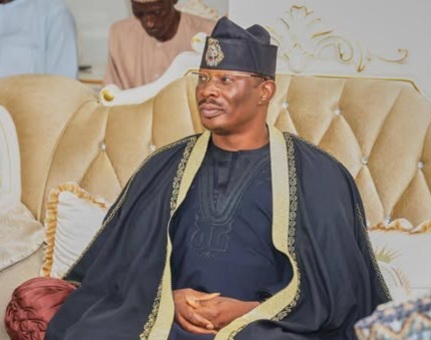
The Etsu of Kwali, His Royal Highness Luka Ayedo Nizasan, has commended the Agro-Climatic Resilience in Semi-Arid Landscapes (ACReSAL) project, describing it as a “well-conceived intervention” that is already delivering meaningful impact across communities in the Kwali Area Council.
Speaking during an exclusive interview, the traditional ruler noted that the project stands out for its people-centred approach, effective execution, and tangible results, even while still ongoing.
“This is a well-conceived project with the right actors involved. The execution has been commendable, and the impact it has already created in our communities shows that government interventions can indeed be done the right way,” he said.
The monarch highlighted that before the intervention, the Kwali communities faced significant developmental challenges. Women, in particular, were limited in their ability to contribute economically—not because of a lack of skills, but because of limited access to resources.
He explained that the collapse of earlier agricultural initiatives, such as the Fadama III project, left a major gap in farming support systems, environmental management, and job creation.
“There was a disconnect in how people pursued development, managed the environment, and earned a living. Most of our people depend on the informal economy, especially farming,” he said.
According to HRH Nizasan, one of the most significant achievements of the ACReSAL project is the economic empowerment of women.
Through organised groups and access to revolving funds, women can now expand their businesses without relying on high-interest loans from financial institutions.
“The fund has created platforms for people to work together and access resources. Women who once struggled to make ends meet are now contributing meaningfully to their households and the wider economy,” he noted.
He added that the initiative has not only improved incomes but has also reduced domestic tensions, as women now play stronger financial roles within families.
The Etsu emphasised that climate-smart agriculture introduced by the project has been a “game changer” for local farmers.
Farmers who had previously abandoned their lands due to poor soil conditions are now returning to agriculture with improved techniques, better inputs, and higher yields.
“People now understand that no soil is useless. With the right knowledge and support, they are producing more and expanding their farms,” he said.
He added that the intervention has reduced the need for farmers to lease land in distant locations, as previously abandoned lands are becoming productive again.
Beyond agriculture and business, the project has also addressed environmental sanitation challenges in the area.
The establishment of community sanitation committees has improved waste management practices, with organised systems now in place for waste collection and disposal.
“Sanitation used to be part of our culture, but over time, we lost that structure. This intervention has helped us rebuild it, and our environment is becoming cleaner,” the traditional ruler explained.
HRH Nizasan also revealed that the project has contributed to peacebuilding within communities.
By bringing together individuals from diverse ethnic and religious backgrounds into cooperative groups, the initiative has strengthened social cohesion and reduced conflict.
He highlighted the role of an Early Response Committee set up under the project, which helps mediate disputes and address potential conflicts before they escalate.
“When people work together and earn together, peace becomes easier to sustain. The structures in place have made conflict resolution more effective,” he said.
The Etsu noted that, unlike many past interventions that failed due to bureaucracy and political interference, ACReSAL has minimised the role of middlemen and ensured that resources reach the intended beneficiaries.
He stressed the importance of community ownership in sustaining the project beyond its funding lifecycle.
“We see this project as our own. By the time the intervention ends, it will already be part of us,” he stated.
In his final remarks, HRH Luka Ayedo Nizasan described the project as a transformative initiative that directly addresses poverty and underdevelopment.
He contrasted it with previous “cosmetic” interventions, noting that ACReSAL targets the root causes of economic hardship, particularly in rural areas.
“ACReSAL is a game changer. It is people-oriented, development-focused, and reaching communities directly—not just urban centres,” he said.
He urged stakeholders to sustain and expand the initiative to ensure that more communities benefit from its impact.
As the ACReSAL project continues to unfold, its growing impact in the Kwali Area Council underscores the importance of inclusive, community-driven development. For many residents, it represents not just an intervention—but a pathway to long-term economic resilience and social stability.
