




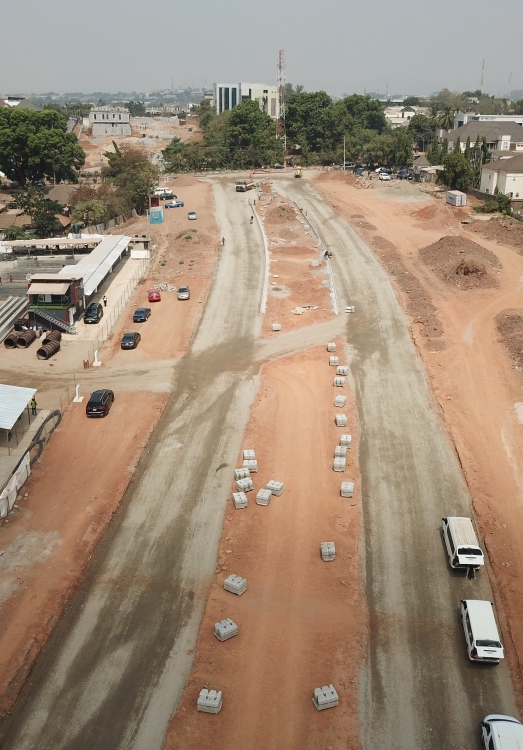
The Minister of the Federal Capital Territory, Nyesom Wike, has reaffirmed the commitment of the FCT Administration to fully activate newly built bus terminals across Abuja, as part of broader efforts to modernise transportation and strengthen urban mobility in the nation’s capital.
Speaking to journalists after inspecting multiple infrastructure projects across the territory, the minister explained that operationalisation of the bus terminals is awaiting approval from the Federal Executive Council, since the contract falls beyond ministerial approval limits. He expressed optimism that the proposal would be approved at the council’s next meeting, allowing immediate commencement of operations.
According to him, the administration deliberately chose a private-sector management approach for the terminals instead of assigning responsibility to the FCT Transportation Secretariat. The goal, he noted, is to ensure professional oversight and efficient service delivery by experienced operators.
He emphasised that the terminals are critical to improving traffic flow, enhancing commuter safety and promoting a structured transport system in Abuja.
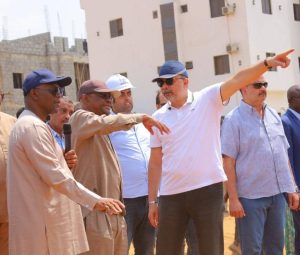
During the inspection tour, the minister provided updates on several major road projects aimed at easing congestion and improving connectivity within the capital city and surrounding districts.
At the Wuse–Central Business District link road being handled by Levante Construction, work is progressing steadily, with completion expected by June. The project is intended to create a smoother traffic corridor and reduce pressure on existing routes in the city centre.
Similarly, construction of the access road to the Mabushi bus terminal by Setraco has reached an advanced stage. The minister said the project is scheduled for inauguration during activities marking President Bola Ahmed Tinubu’s third year in office.
Other inspected projects included Arterial Road N1 linking Wuye District to Ring Road II, which is being executed by Arab Contractors, and is expected to be completed before the end of the year.
The minister also highlighted the strategic importance of the 17-kilometre Dei-Dei–Karmo road corridor, which connects several densely populated communities, including Dei-Dei, Gwagwa, Idu, Karmo and Jiwa, and eventually links to the Life Camp axis on Obafemi Awolowo Way. He described the project as a key component of efforts to open up the FCT and stimulate economic activities in developing districts.
He noted that many of the ongoing infrastructure projects are directly impacting residents by improving accessibility, supporting commercial activities and enhancing urban planning across the territory.
On funding, the minister revealed that most of the projects are being financed through the FCT’s Internally Generated Revenue rather than allocations from the Federation Account. He explained that while federal allocations largely cater for salary obligations, aggressive revenue mobilisation has enabled the administration to sustain large-scale construction projects.
He added that this financial strategy has provided stability and continuity for infrastructure development, ensuring that projects are not delayed due to funding gaps.
Addressing concerns about vandalism of public facilities, the minister said the administration is introducing new measures to safeguard infrastructure, particularly streetlights. Under new contracts awarded to China Civil Engineering Construction Corporation and China Geo-Engineering Corporation
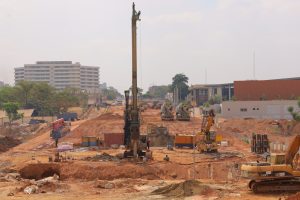
Modern surveillance features and a central monitoring system are being integrated into the lighting infrastructure.
This technology-driven approach, he explained, will allow real-time tracking and rapid response, reducing reliance on physical security deployment and making public assets more resilient against criminal damage.
He commended contractors for maintaining quality standards and meeting timelines, noting that sustained collaboration between government and private-sector partners remains essential to the success of the infrastructure programme.
Reiterating the administration’s development agenda, the minister said the focus remains on projects that deliver tangible benefits to residents, enhance mobility and support economic growth.
He stressed that transportation reforms, road expansion, and infrastructure protection are central to building a functional capital city, adding that the government remains committed to delivering people-oriented projects that improve residents’ daily lives and strengthen Abuja’s position as a modern and efficient administrative capital.
