




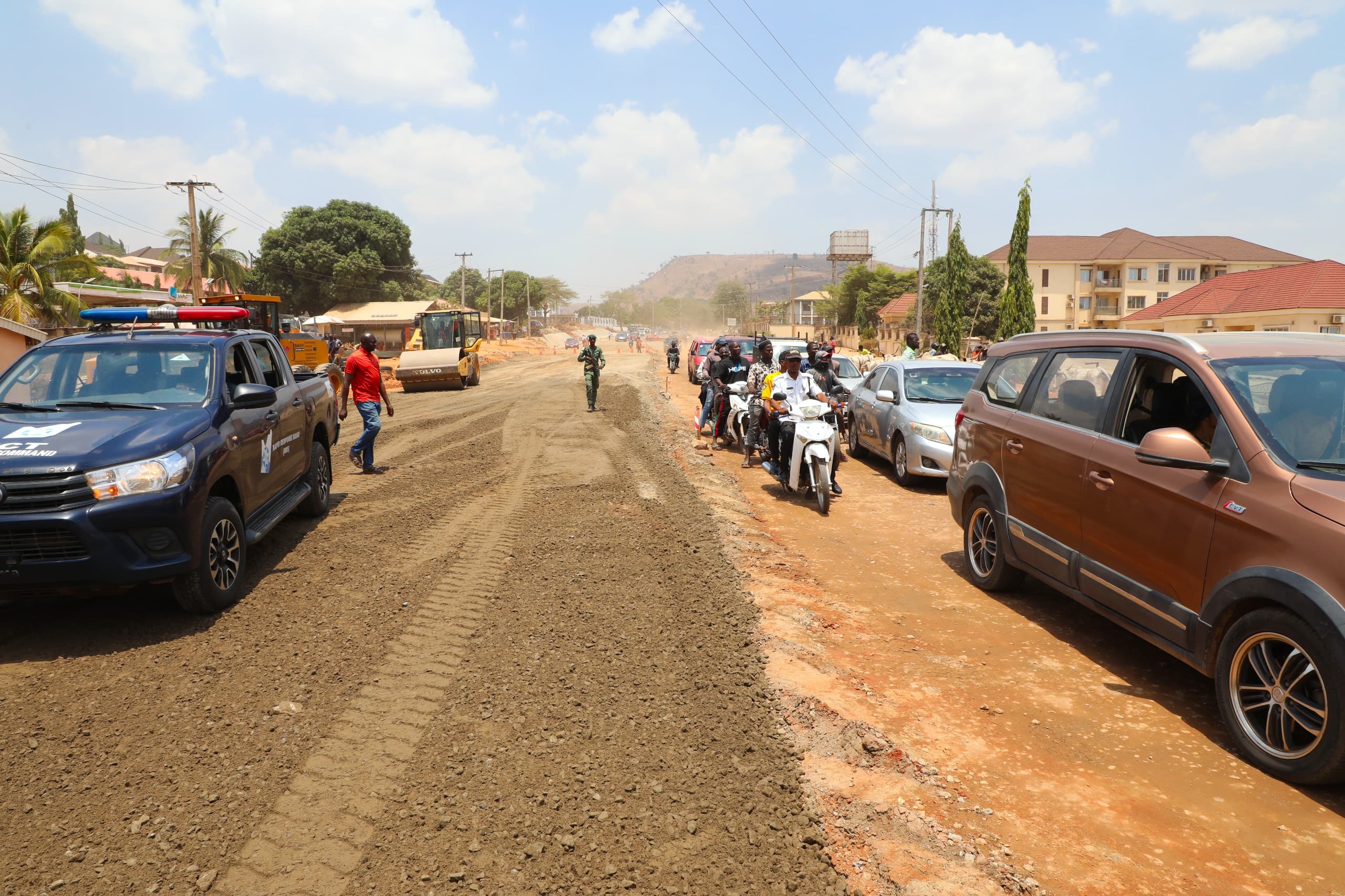
The Minister of the Federal Capital Territory (FCT), Ezenwo Nyesom Wike, has reaffirmed the Federal Government’s commitment to accelerating development in rural and satellite communities, emphasising that strategic investment in infrastructure will unlock economic growth and reduce pressure on Abuja’s city centre.
The Minister made this known on Wednesday, March 18, 2026, during an extensive inspection of ongoing road projects across several satellite towns in the Federal Capital Territory.
According to him, the ongoing infrastructure expansion in suburban areas is a key directive from President Bola Ahmed Tinubu aimed at promoting balanced development across the capital territory.
Wike explained that for many years, development in Abuja had been concentrated mainly in the city centre, leaving satellite towns with limited infrastructure. However, the current administration has adopted a new approach that prioritises inclusiveness by extending critical projects to underserved communities.
He noted that improving road networks in satellite towns would enhance accessibility, boost economic activities, and reduce the need for residents to migrate into the city in search of better opportunities.
The Minister stressed that when communities are well connected by modern road infrastructure, businesses can thrive locally, transportation becomes easier, and overall quality of life improves significantly.
During the tour, the Minister visited several strategic road projects, including the 13-kilometre road in Karu, the Apo–Karshi road corridor, the ongoing emergency construction of the Bwari–Kubwa road, and the rehabilitation of Gbazango Road—popularly known as Arab Road—in Kubwa.
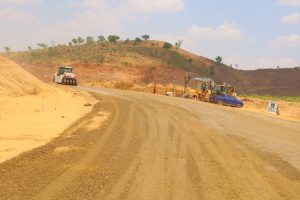
He expressed satisfaction with the progress so far, noting that many roads that were previously in poor condition or completely impassable are now being transformed into durable, motorable routes.
According to Wike, the completion of these projects will significantly ease traffic congestion, improve connectivity between communities, and open up new economic corridors across the territory.
He particularly highlighted the Bwari–Kubwa road project as a major intervention that will transform commuters’ daily experience. The Minister recalled that the road was once nearly unusable but is now being reconstructed to meet modern standards.
The Minister emphasised that infrastructure development goes beyond road construction, as it directly impacts economic productivity. He explained that when roads are improved, farmers can transport goods more easily, traders can reach markets more quickly, and small businesses can expand operations.
He added that the administration’s focus on satellite towns is already yielding positive results, as more residents are beginning to see tangible improvements in their communities.
Wike noted that this level of transformation has increased public confidence in the government, as citizens can now see real evidence of development rather than mere promises.
The Minister also praised the contractors handling the projects for their professionalism and adherence to quality standards. He specifically mentioned companies such as Zeberced Nigeria Limited, Arab Contractors, and Abdul Val Construction Company Limited for demonstrating strong technical capacity and commitment to timely delivery.
At the Gbazango Road project in Kubwa, Wike expressed satisfaction with the quality of construction, particularly the three-layer asphalt technique being applied. He explained that the method, which involves a thickness of up to 18 centimetres, is designed to ensure durability and longevity.
According to him, some of the projects are expected to be completed and commissioned during activities marking the third anniversary of President Tinubu’s administration.
The Minister reiterated that one of the primary goals of the ongoing infrastructure drive is to decongest Abuja’s city centre. By making satellite towns more attractive and livable, the government aims to reduce the influx of people into central districts.
He explained that when residents can comfortably live and work in suburban areas without needing to travel long distances daily, the pressure on urban infrastructure will decrease significantly.
This, he said, aligns with the broader vision of creating a well-balanced capital city with evenly distributed development.
Addressing concerns about the activities of some real estate developers, Wike dismissed calls for the establishment of a new regulatory agency. He argued that existing institutions, such as the Federal Capital Development Authority, are capable of effectively handling regulatory responsibilities.
The Minister maintained that creating additional agencies would not necessarily solve the problem but could instead complicate governance structures.
He revealed that the FCT Administration has already intervened in several cases where developers allegedly defrauded residents, ensuring that affected individuals received refunds.
As residents prepare to celebrate Eid al-Fitr, the Minister called for unity, cooperation, and continued support for the government. He emphasised that national development requires collective effort from both leaders and citizens.
Wike assured residents that the administration would continue to prioritise infrastructure development and improve security across the territory.
He encouraged residents to remain law-abiding and to support government initiatives to enhance economic growth and social stability.
The ongoing infrastructure projects across satellite towns are expected to reshape the FCT’s development landscape in the coming years. With improved road networks and increased government presence in rural communities, residents are likely to experience better living conditions and expanded economic opportunities.
Observers believe that the administration’s focus on satellite towns represents a strategic shift in governance—one that prioritises inclusiveness, sustainability, and long-term growth.
As construction work progresses, many residents are hopeful that the completion of these projects will usher in a new era of development, making the FCT not only a political capital but also a model for balanced urban and rural growth in Nigeria.
