





The Federal Road Safety Corps (FRSC) and the Judiciary have renewed calls for stronger institutional cooperation to improve the prosecution of traffic offences, promote speedy justice and strengthen compliance with road safety laws across Nigeria.
The call was made in Abuja during a capacity-building workshop focused on the role of Mobile Courts and the Judiciary in traffic law enforcement.
Speaking at the event, the Corps Marshal of the FRSC, Malam Shehu Mohammed, said effective enforcement of traffic regulations required more than arrests and sanctions, stressing the importance of proper documentation, credible evidence, fair adjudication and respect for the rights of accused persons.
Mohammed said the FRSC had a statutory responsibility for traffic enforcement and prosecution, while the Judiciary remained central to ensuring that alleged offences were determined fairly and in accordance with established laws and procedures.
He described Mobile Courts as an important mechanism for dealing with traffic offences promptly, saying their effective operation could help discourage dangerous driving and encourage motorists to comply with road safety regulations.
However, the Corps Marshal cautioned that the pursuit of speedy justice must not compromise fairness.
According to him, enforcement actions must be lawful and supported by evidence, while individuals accused of traffic offences must be given the opportunity to defend themselves before a competent court.
Mohammed said the workshop was organised to improve the professional capacity of FRSC personnel and strengthen cooperation between road safety officials and judicial institutions.
He identified proper documentation of offences, evidence management, prosecution procedures and effective interaction with courts as areas requiring continuous improvement.
The Corps Marshal also highlighted practical challenges affecting successful prosecution, including personnel training, logistics, attendance of witnesses and the handling of electronic evidence.
Addressing these challenges, he said, would contribute to more effective traffic law enforcement and help build greater public confidence in the justice process.
Mohammed urged participants to apply the knowledge gained during the workshop in their daily responsibilities, noting that professional enforcement should be complemented by sustained public education.
He stressed the importance of encouraging motorists to obey speed limits, use seat belts, respect traffic signs and observe other established road safety requirements.
He reaffirmed the FRSC’s commitment to working closely with the Judiciary, describing effective cooperation between the two institutions as essential to improving road safety outcomes.
The Chief Judge of the Federal Capital Territory, Justice Husseini Baba-Yusuf, commended the FRSC for organising the workshop, describing it as an important platform for strengthening the professional knowledge of both judicial officers and road safety personnel.
Baba-Yusuf said the programme would promote greater interaction among stakeholders while helping participants better understand the operational challenges faced by the FRSC and the legal framework governing road traffic offences.
He noted that judicial officers with a clearer understanding of the realities of traffic enforcement would be better positioned to consider cases within the appropriate legal framework.
The Chief Judge also expressed his appreciation for the FRSC’s role in enforcing traffic regulations and promoting safer road use.
Delivering a lecture titled Trial of Simple Traffic Offences in Road Safety Mobile Courts in Nigeria: Law, Procedure and Practice,” the Chief Registrar of the Federal High Court, Mr Yahaya Shafa, urged magistrates presiding over traffic matters to maintain professionalism, patience and courtesy.
Shafa, who was represented by the Director of Magistrates at the FCT High Court, Idayat Akanni, said judicial officers should treat defendants, lawyers, prosecutors, enforcement officers, witnesses and members of the public with dignity.
He cautioned against conduct such as insults, intimidation, humiliation, shouting and sarcastic remarks during proceedings.
He also urged magistrates to exercise patience when defendants experience difficulties understanding court procedures and ensure that court staff and enforcement personnel maintain respectful conduct towards everyone appearing before the court.
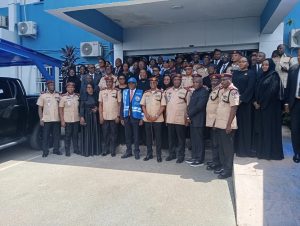
The event concluded with the investiture of Justice Husseini Baba-Yusuf as an Honorary Special Marshal of the FRSC, highlighting the Corps’ recognition of the Judiciary’s role in supporting effective and lawful traffic enforcement.
The renewed emphasis on collaboration between the FRSC and the Judiciary underscores the need for a traffic enforcement system that combines deterrence with due process, professional evidence handling and public confidence. Such cooperation could help ensure that traffic offences are addressed promptly while safeguarding the rights of all parties involved.
