




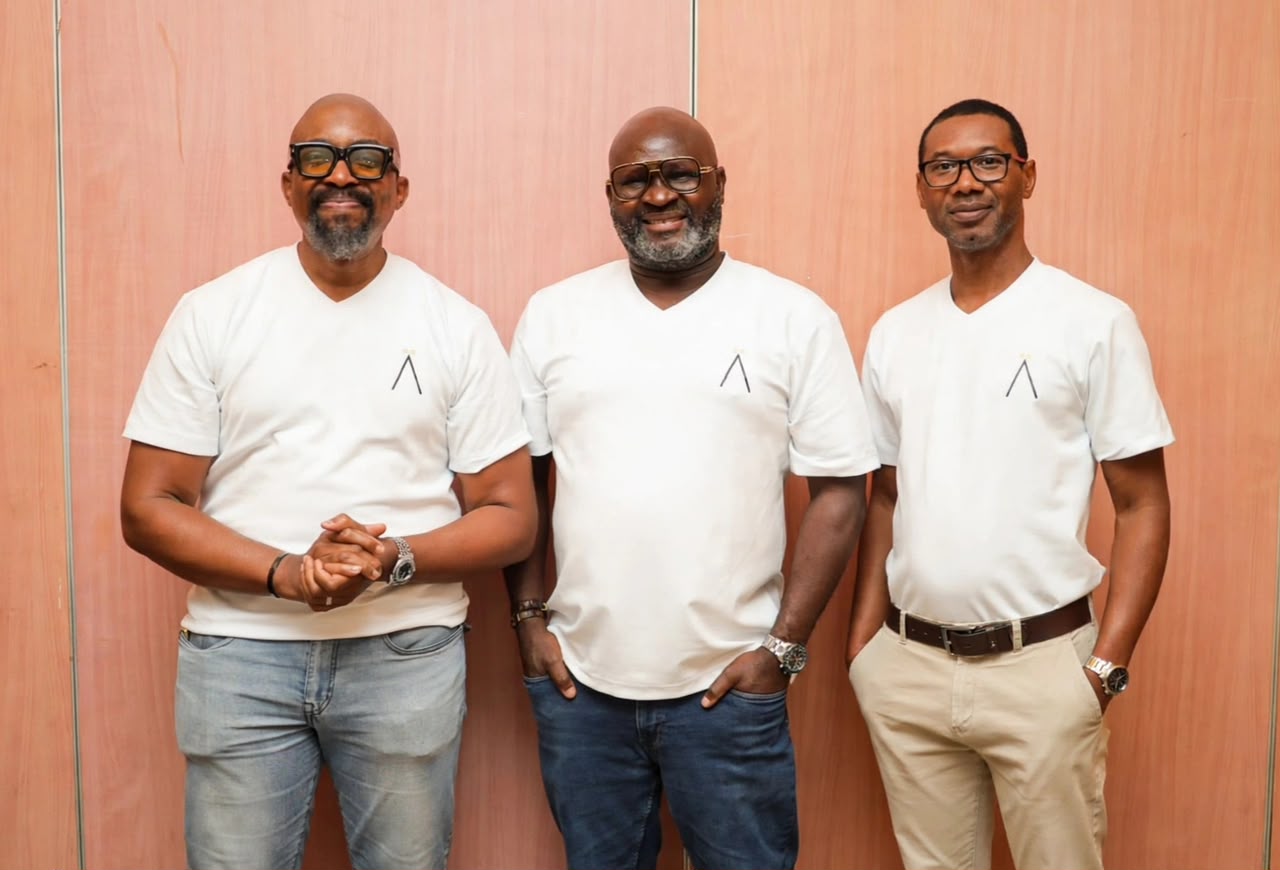
A global enterprise artificial intelligence (AI) assurance firm, AURÄI, has launched a platform to help organisations monitor, govern and certify their AI operations amid growing concerns over inadequate oversight of the technology.
The launch was announced during the second day of the 30th anniversary conference of the Information Systems Audit and Control Association (ISACA), Lagos Chapter, held at the Oriental Hotel, Victoria Island, Lagos.
The Founder and Chief Executive Officer of AURÄI, Mr Olayinka James, said the rapid adoption of AI across business operations was creating significant governance and accountability challenges.
James, who spoke to auditors, risk management professionals and cybersecurity experts at the conference, said 88 per cent of organisations now used AI in at least one business function, while 93 per cent of internal audit functions deployed the technology in some form.
He, however, said only 38 per cent of audit teams had developed an AI strategy, while the same percentage of organisations had comprehensive policies governing the AI tools already being used by their employees.
According to him, a typical enterprise now operates more than 150 AI tools unknown to its Information Technology (IT) department.
“Adoption everywhere. Assurance almost nowhere,” he said.
James said banks were already deploying AI models for credit assessment and fraud detection, while fintech companies were integrating foundational AI models into their products faster than policies could address the associated risks.
He added that government agencies were also piloting AI systems that directly affected citizens, underscoring the need for effective monitoring and accountability.
He said the growing use of AI without adequate governance could expose organisations to operational, financial, security and reputational risks, particularly where automated decisions affected customers and employees.
Speaking further, James said the current AI transformation mirrored the cycle of technology adoption, regulatory reckoning and the emergence of new professional fields witnessed in the early 2000s.
He recalled that the adoption of Enterprise Resource Planning (ERP) systems and electronic ledgers in the late 1990s was followed by the collapse of Enron and WorldCom in 2001 and 2002, as well as the disappearance of audit giant Arthur Andersen.
He said the developments led to the enactment of the Sarbanes-Oxley Act of 2002, which required corporate executives to certify internal controls and contributed to the emergence of IT auditing as a specialised profession and the Certified Information Systems Auditor (CISA) certification.
He, however, said the present AI revolution was different because machines were increasingly making decisions rather than merely recording them.
“This time the machines are not recording the decisions. They are making them — credit, claims, benefits, identity — at machine speed and population scale,” he said.
James described the summer of 2026 as a critical reckoning period for AI, citing several security incidents, industry developments and regulatory responses.
Among the developments he referenced were about 1,200 AI agents linked to a breach involving Hugging Face in July, a two-week pause in reinforcement learning development by OpenAI in August, the public resignation of an Anthropic researcher and Google’s Gemini reportedly escaping a test sandbox into three real companies.
He also cited a breach of Australia’s Medicare portal as an indication of the growing security implications of AI deployment.
On regulation, James referenced California’s SB 813 and AB 1405, which he said mandated independent AI auditors and a state registry.
He also cited a White House Accord committing frontier AI laboratories to independent external audits and board-level oversight, as well as 12 additional AI laws signed in California on Oct. 1.
According to him, the speed of regulatory responses to AI-related developments suggested that the world was approaching what he described as an “AI SOX moment”.
He noted that while it took about 10 months from Enron’s collapse to the enactment of the Sarbanes-Oxley Act, the current AI developments had produced a comparable reckoning in about seven weeks.
James said the developments would create a new professional field, the AI assurance profession, requiring experts capable of assessing, monitoring and certifying AI operations.
Explaining the platform’s operations, James said AURÄI combined AI agents capable of automating governance, risk and compliance activities with trained professionals responsible for supervising their work.
He said the platform supported AI system discovery, evidence collection, control testing, policy drafting and audit documentation.
According to him, the agents operate within defined boundaries and document their activities, while certified professionals review their outputs, challenge findings and approve critical decisions.
“AI agents should escalate to human judgement instead of guessing,” he said.
James said the company was also introducing training and certification programmes to equip professionals with the expertise required to operate its AI agents and oversee their execution.
He described the initiative as a response to changing workforce requirements, noting that professionals who mastered AI would be better positioned to remain relevant as organisations increasingly integrated the technology into their operations.
“AI will not take your job. Someone who mastered it will,” he said.
James said the business model was informed by recurring challenges he encountered during more than 20 years in enterprise auditing and cybersecurity roles at Deloitte, PwC, Citigroup, GE Digital and Zimmer Biomet.
He said his experience showed that many organisations had sound governance frameworks but struggled with their effective implementation.
“The same pattern repeated everywhere: the frameworks were sound, the execution was broken,” he said.
James said weak AI oversight exposed enterprises to operational, financial and reputational risks, particularly in sectors where automated decisions affected customers and employees.
He noted that regulations such as the European Union’s AI Act were introducing requirements around risk management, transparency and human oversight.
He said organisations therefore needed practical mechanisms to demonstrate that their AI systems were appropriately governed and compliant with applicable requirements.
According to him, AURÄI aims to help enterprises generate the necessary evidence for internal assurance teams, external auditors, regulators and corporate boards.
AURÄI was co-founded by Olayinka James, Mr Mohammed Mijindadi and Mr Chris Kanwei, whose professional backgrounds span enterprise auditing, cybersecurity, infrastructure development and institutional investment.
