




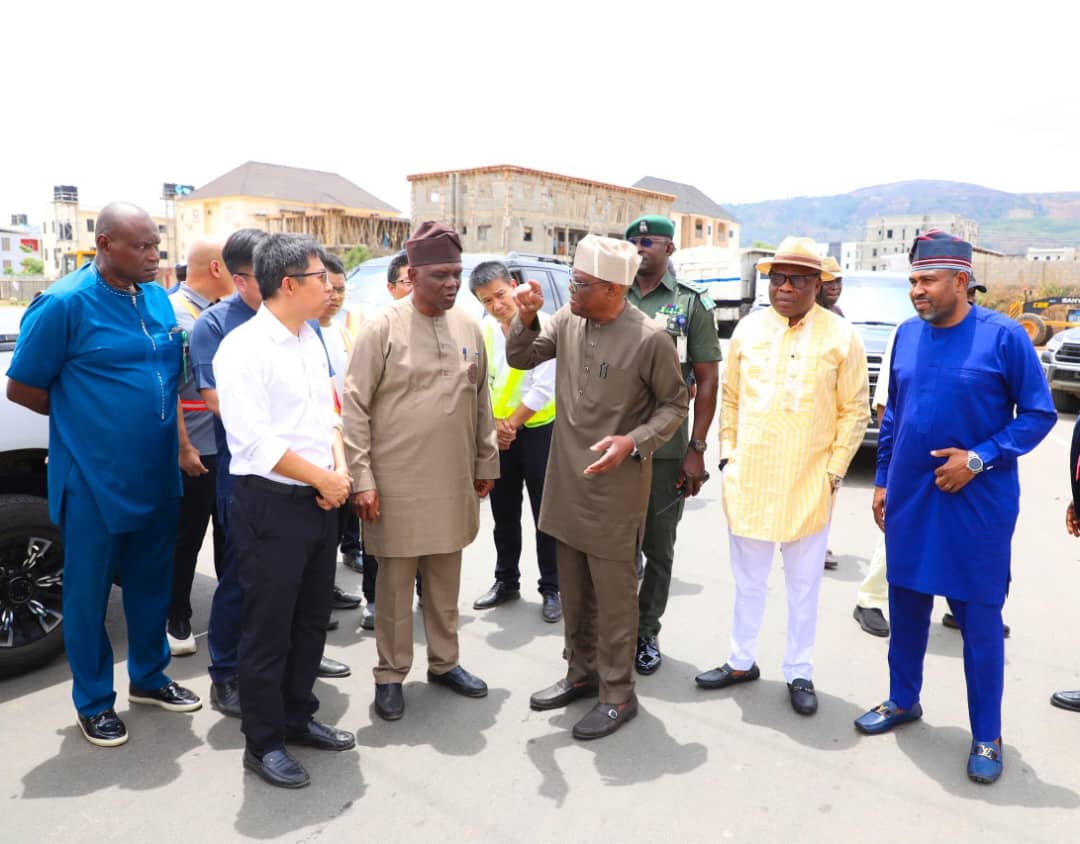
Federal Capital Territory Minister Nyesom Wike has directed the immediate extension of the 10-kilometre Outer Southern Expressway (OSEX) main carriageways from Ring Road II in Apo to Wasa Junction as part of efforts to complete Abuja’s arterial road network and improve transportation across the capital territory, May 7, 2026. The minister said the project would enhance connectivity for residents, businesses and commuters while fulfilling another major infrastructure commitment of the current administration.
Wike gave the directive during an inspection of ongoing infrastructure projects scheduled for inauguration as part of activities marking President Bola Tinubu’s third year in office. The inspection covered several strategic locations, including the OSEX corridor, Collector Road CN2 in Katampe District, roads within Gaduwa District and the Wasa informal sector development site.
Speaking with journalists after the inspection, the minister expressed satisfaction with the pace and quality of work across the various project sites. He particularly commended progress on the OSEX bridge and instructed the Federal Capital Development Authority to ensure the contractor, China Geo-Engineering Construction (CGC), completes the entire extension without delay.
“I have instructed the Executive Secretary that from where this OSEX road stops at Ring Road II Junction, it should be extended to Wasa Junction so the full corridor can be completed,” Wike said. “At the end of the day, residents will see that this administration has fulfilled another important promise.”
According to the minister, the extension will provide smoother movement between districts, reduce traffic congestion and support ongoing urban expansion in developing parts of Abuja. He noted that the road network is expected to open up more areas for residential and commercial activities while improving access to growing communities.
Wike also praised the near completion of the Collector Road CN2 project in Katampe District, describing the progress as impressive. He said the installation of streetlights and pedestrian walkways was already underway, signalling that the project was nearing completion.
The minister stressed that road infrastructure remains a major priority of the Federal Capital Territory Administration because of its direct impact on economic growth, transportation and urban development.
At the Wasa District relocation site for Apo Mechanic traders, Wike said the project was almost completed and would finally address a relocation issue that had remained unresolved for many years.
“Apo Mechanic relocation has been discussed since the early years of the FCT, but now it is becoming a reality,” he said. “The required infrastructure has been provided, and the traders will soon be able to move into the new location.”
He explained that the new Wasa informal sector site was designed to provide better working conditions for traders and artisans while creating a more organised commercial environment. According to him, the development is also expected to increase the Federal Capital Territory’s internally generated revenue as businesses begin operations in the area.
Wike added that the administration’s investments in infrastructure are aimed at improving both economic opportunities and the quality of life for residents in satellite communities and urban districts alike.
The minister also provided updates on major water supply projects in satellite towns, including Karu and Bwari. He said the projects are progressing steadily and are expected to be completed before the end of May.
He commended the contractors handling the water projects for maintaining construction standards and meeting deadlines despite the administration’s outstanding financial obligations, showing commitment and professionalism,” Wike said. “Despite financial challenges, they are continuing to deliver quality work within the agreed timelines.”
Beyond infrastructure, the minister addressed criticism of recent land allocations to ambassadors-designate and other organisations in the Federal Capital Territory. He dismissed allegations that the allocations represented misplaced priorities, insisting that land allocation is a normal government responsibility aimed at encouraging investment and development.
According to him, individuals and institutions that contribute to the country’s economic and diplomatic growth should have access to land for legitimate development purposes.
“What is wrong with allocating land to Nigerians and organisations that want to invest and create opportunities?” he asked. “The government has also allocated land to media organisations and businesses in the past.”
Wike argued that critics often overlook similar allocations made to private companies and institutions while focusing only on recent decisions involving diplomats and public officials.
He further clarified that the administration does not directly sell land in the Federal Capital Territory. He explained that payments made after land allocations are primarily for documentation and Certificates of Occupancy.
“Nobody buys land from the FCTA,” he said. “Once land is allocated, the beneficiaries pay statutory fees for documentation and processing of their Certificates of Occupancy.”
The minister also addressed recent government action in the Jabi Lake area, revealing that the administration intervened after developers failed to carry out the agreed projects on the allocated land for more than 2 decades.
According to Wike, the land had originally been designated for tourism and entertainment development, but remained unused despite repeated commitments by the allottees.
“That area was allocated over 20 years ago with plans for a world-class tourism and entertainment centre, but nothing happened,” he said. “Government cannot allow valuable land in such a strategic location to remain undeveloped indefinitely.”
He disclosed that new investors have now entered into agreements with the administration to redevelop the area under specific conditions. Wike warned that any investor who fails to meet development timelines risks losing the allocation.
The minister maintained that the Federal Capital Territory Administration would continue prioritising practical urban development policies rather than political criticism.
“We will continue to stand by the truth and focus on realistic development that benefits residents and attracts investment,” he said.
