




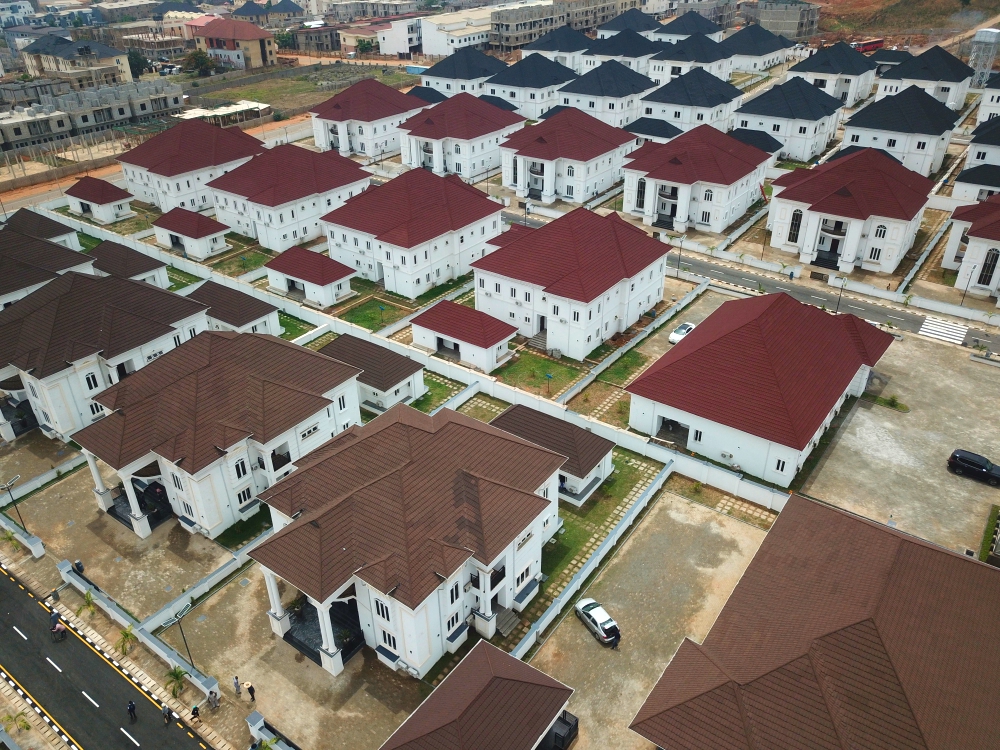
Federal Capital Territory (FCT) Minister Nyesom Wike has defended the construction of residential and office facilities for members of the judiciary, insisting that government support for judicial infrastructure does not undermine the independence or integrity of the justice system, May 8, 2026.
Wike made the remarks after inspecting ongoing judicial infrastructure and major road projects in Abuja scheduled for inauguration as part of activities marking President Bola Ahmed Tinubu’s third anniversary in office.
The minister’s comments followed concerns reportedly raised by Nigerian Bar Association (NBA) President Afam Osigwe, who suggested that the provision of buildings, vehicles and other benefits for judges by the executive arm of government could compromise judicial independence.
Responding to the criticism, Wike described the argument as misleading and inconsistent with Nigeria’s long-standing governance structure. According to him, the Federal Capital Development Authority (FCDA) has historically provided infrastructure for independent government institutions without interfering in their operations.
“The Supreme Court complex was built by the FCDA. The National Assembly quarters were also provided by the government, and INEC offices were constructed through public funding,” Wike said. “Providing infrastructure for the judiciary does not amount to interference. The goal is to create a conducive environment that allows judges and justices to focus on their duties effectively.”
He added that President Tinubu had directed the FCT Administration to improve welfare and working conditions for judicial officers as part of broader institutional reforms aimed at strengthening the rule of law.
Wike also criticized what he described as double standards within the NBA leadership, pointing out that the association regularly receives support and sponsorship from state governments for conferences and professional activities.
The minister referenced the upcoming NBA conference in Rivers State, noting that the state government contributed financially to support the event. He questioned why such funding was not considered interference with the independence of the association.
“It is contradictory for the NBA to accept funding from government institutions while arguing that government support for the judiciary weakens independence,” he said. “Support for institutional development does not automatically translate into control or influence.”
The minister maintained that the FCT Administration would continue with the judicial infrastructure projects despite criticism, emphasizing that the developments were designed to improve efficiency within the justice sector.
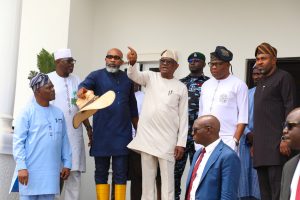
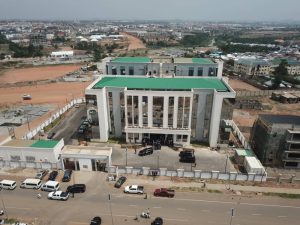
During the inspection tour, Wike visited several ongoing projects, including the Judges’ Quarters, the Abuja Division of the Court of Appeal, the Collector Road C01 in Life Camp and the Arterial Road N5, also known as Obafemi Awolowo Way, linking Life Camp Junction to Dei-Dei.
He expressed satisfaction with the progress made on most of the projects, especially the Judges’ Quarters, which he said had reached about 99 percent completion. According to him, the project, handled by a Nigerian construction company, is expected to be commissioned during activities commemorating the president’s third year in office.
However, Wike expressed dissatisfaction with aspects of the finishing work at the Abuja Division of the Court of Appeal complex. He directed the contractor to address identified defects before the official commissioning ceremony.
“The quality of finishing is not at the level I expected,” the minister said. “I have pointed out areas that require improvement, and there is still time for corrections before the inauguration.”
The minister also revealed plans for additional judicial housing projects, including residences for judges of the National Industrial Court and the Code of Conduct Tribunal. He said the projects are part of efforts to strengthen institutions and improve the welfare of judicial officers.
Beyond the judiciary, Wike highlighted ongoing road infrastructure projects aimed at improving connectivity across Abuja and surrounding satellite communities. He commended construction company Julius Berger for completing the N5 road project and disclosed that an additional 800-meter road link would be constructed to connect the Dei-Dei and Life Camp corridor.
According to him, road projects are intended to ease transportation challenges, improve access to developing districts, and support economic growth within the capital territory.
On environmental sanitation, the minister ruled out the reintroduction of a once-a-month sanitation exercise in Abuja. He argued that maintaining a clean city should become part of residents’ daily habits rather than depending on periodic exercises.
“Environmental cleanliness must be a continuous responsibility,” he said. “One sanitation day every month can not solve waste management challenges in a growing city like Abuja.”
Wike encouraged residents to properly dispose of waste and ensure drainages are cleared regularly to support effective waste collection by contractors.
The minister also disclosed that the FCT Administration is considering proposals for modern recycling plants that can convert waste into reusable products. According to him, the administration is exploring long-term solutions for sustainable waste management and environmental protection.
“Waste disposal is a global challenge, and modern cities are moving toward recycling and waste-to-product systems,” Wike explained. “We are reviewing proposals from companies with experience in recycling technology because dumping waste alone is not enough.”
He said the initiative could create economic opportunities, reduce environmental pollution, and support cleaner urban development in Abuja.
Observers say the FCT Administration’s focus on infrastructure, institutional support, and urban development reflects a broader strategy to modernize Nigeria’s capital city. The combination of judicial reforms, road expansion, and environmental initiatives is expected to improve governance and attract investment into the territory.
The latest projects also highlight the administration’s effort to balance physical development with institutional strengthening as Abuja continues to expand in population and economic importance.
With multiple infrastructure projects nearing completion ahead of the president’s anniversary celebrations, the FCT Administration says it remains committed to delivering projects that improve public services, strengthen democratic institutions and enhance the quality of life for residents across the territory.
