




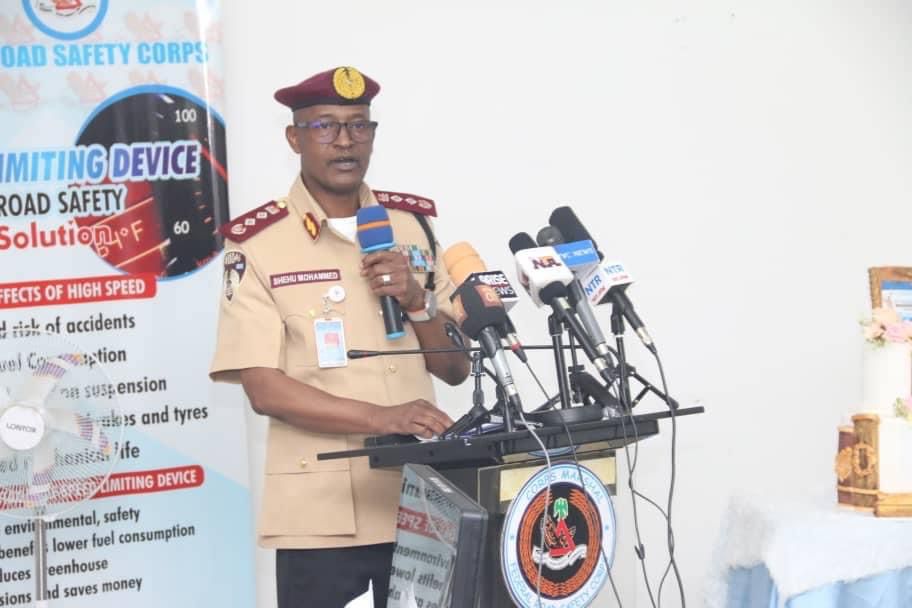
Nigeria is taking a leading role in Africa’s campaign to improve road safety and reduce traffic-related deaths by 50 percent before 2030, according to the Federal Road Safety Corps (FRSC).
The Corps Marshal of the FRSC, Shehu Mohammed, disclosed this in an interview with the News Agency of Nigeria (NAN) in Abuja on Wednesday, saying the country is strengthening partnerships and policies aimed at making transportation safer across the continent.
Mohammed said Nigeria’s position as Africa’s largest economy places a responsibility on the country to champion road safety reforms and set standards for other nations in the region.
He explained that the FRSC is aligning its operations with the United Nations Decade of Action for Road Safety, a global initiative focused on cutting road traffic deaths and injuries by half before the end of the decade.
According to the corps marshal, Nigeria has adopted a strategy to reduce road crashes and fatalities by at least 10 percent every year to meet the 2030 target.
“Nigeria remains committed to ensuring safer mobility for lives, property and services across Africa,” Mohammed said. “Human life must be properly valued within transportation systems, and road safety must remain a top priority.”
He noted that Nigeria’s hosting of the West African Road Safety Organisation (WARSO) Secretariat and the Association of African Road Safety Lead Agencies demonstrates the country’s growing influence in continental road safety management.
Mohammed said the secretariat serves as a coordination center for road safety activities in West Africa and across the continent, helping member countries strengthen cooperation, policy integration and public safety strategies.
He added that African countries participating in the initiative have shown commitment toward achieving the shared goal of safer roads and reduced accident fatalities.
The FRSC boss identified public awareness campaigns, stricter law enforcement, community engagement and continuous education as key measures required to achieve the target.
According to him, road safety cannot be achieved by government agencies alone, stressing that citizens, transport operators and private organizations all have important roles to play.
“Road safety is a shared responsibility,” he said. “We need collective participation from governments, communities, drivers and road users to build safer transportation systems.”
Mohammed also highlighted the importance of stronger regional collaboration, noting that improved coordination among African countries could help address common challenges such as reckless driving, poor compliance with traffic regulations and inadequate road safety awareness.
The News Agency of Nigeria reports that Nigeria recorded a 12 percent reduction in road traffic fatalities during the first quarter of 2026 compared to the same period in 2025. The FRSC described the decline as a positive sign that ongoing safety campaigns and enforcement measures are beginning to produce results.
Experts say sustained investment in road infrastructure, traffic management technology and public education will be critical for Nigeria and other African countries to achieve the 2030 road safety target.
