




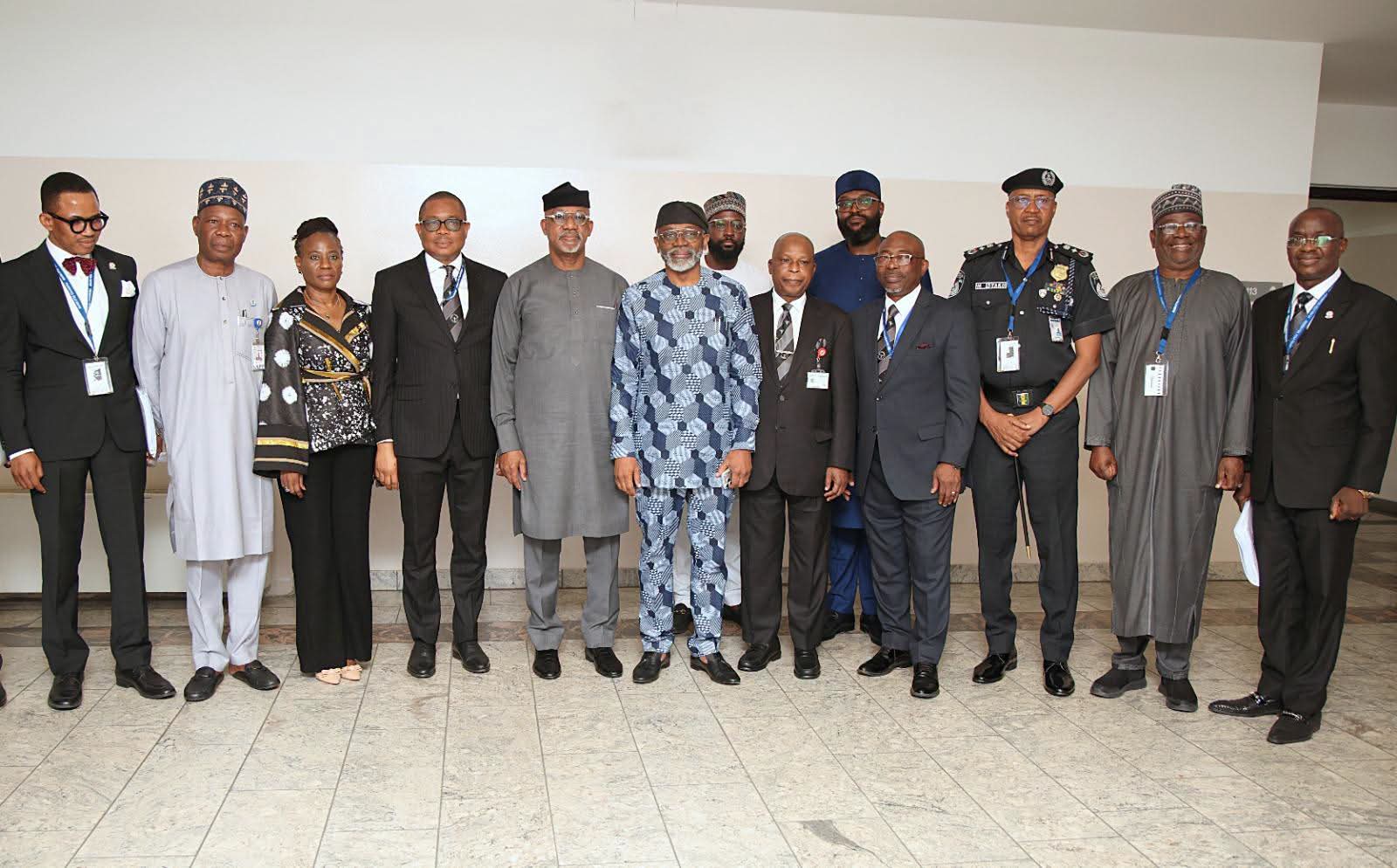
President Bola Ahmed Tinubu has inaugurated a Presidential Working Group on the National Policing Bill, marking another major step towards the possible creation of state police across Nigeria.
The committee was inaugurated on Tuesday at the Presidential Villa, Abuja, with the President represented by his Chief of Staff, Femi Gbajabiamila. The panel is expected to prepare the legal framework that would guide the implementation of state police if the ongoing constitutional amendment process is completed.
The development follows the passage of the Constitution Alteration (State Police) Bill, 2026, which proposes a dual policing structure comprising a Federal Police Service and 36 State Police Services. The proposed reform is one of the most significant security policy changes currently before Nigeria’s democratic institutions.
While the constitutional amendment seeks to create room for state police, President Tinubu said the amendment alone would not be enough to put the new system into operation. According to him, the National Policing Bill is needed to define how the new structure would work in practice.
“The Constitution Amendment Bill establishes the framework for dual policing, but it does not operationalise it. That work is left to the National Policing Bill,” the President said.
The proposed legislation is expected to cover minimum policing standards, certification of state readiness, coordination between federal and state authorities, accountability rules, human rights safeguards and fiscal conditions.
The Presidential Working Group is being asked to produce an implementation-ready draft of the National Policing Bill for transmission to the National Assembly once the constitutional amendment process reaches the required stage.
President Tinubu said the Federal Government does not want to wait until the constitutional process is completed before beginning the technical work needed for implementation.
“We must not wait until the constitutional process is concluded before beginning this important assignment,” he said.
Gbajabiamila will chair the committee. Other members include the Attorney-General of the Federation, the President of the Nigerian Bar Association, the Chairman of the Nigeria Governors’ Forum, the National Security Adviser, the Inspector-General of Police and the Chairman of the NGF Committee on State Police. A secretariat will provide administrative support.
The composition of the committee shows that the government is trying to bring together legal, security, political and administrative actors who would be central to implementing any future state police system.
The debate over state police is not new. For years, governors, security experts, civil society groups and community leaders have argued that Nigeria’s centralised policing structure is too stretched to respond effectively to local security threats.
Under the current arrangement, policing is largely controlled from the federal level, even though governors are often described as the chief security officers of their states. In practice, many governors have complained that they are held responsible for insecurity without having full operational control over the police command in their states.
Supporters of state police argue that local police services would understand community terrain better, gather intelligence faster, respond more quickly to emergencies and complement federal security agencies.
In February 2026, President Tinubu urged senators to amend the Constitution to accommodate state police, saying the country needed a stronger response to terrorism, banditry and insurgency. The Presidency later said in June that discussions had advanced and that the debate was no longer mainly about whether state police should happen, but about building the right legal and institutional framework. (State House)
The latest inauguration of a working group suggests that the government is now preparing for the practical stage of the reform.
Speaking on behalf of the Nigeria Governors’ Forum, Ogun State Governor Dapo Abiodun pledged governors’ support for the speedy implementation of the reform.
He said the plan is for the 36 governors to accelerate work on the bill once it reaches their respective Houses of Assembly. Constitutional amendments in Nigeria require approval from at least two-thirds of state assemblies before they can take effect.
Abiodun described the proposed state police system as a response to Nigerians’ long-standing demand for community-based policing.
“This bill has answered the cries of Nigerians about cascading policing and removing it from the Exclusive Legislative List,” he said.
He also pointed to regional security outfits such as Amotekun in the South-West as examples of how local security initiatives have tried to fill gaps in the existing structure.
According to the governor, if each state deploys about 6,000 personnel, Nigeria could add nearly 200,000 officers to support existing federal police operations.
That projection, if achieved, could significantly increase Nigeria’s security manpower. However, recruitment alone will not solve the problem unless the system also addresses training, funding, discipline, intelligence, equipment and respect for citizens’ rights.
Attorney-General of the Federation and Minister of Justice, Lateef Fagbemi, SAN, described the initiative as timely, given Nigeria’s current security challenges. He urged governors to work for the speedy ratification of the constitutional amendment by their state assemblies.
“There is no denying the fact that we are in a critical moment security-wise, and all hands must be on deck,” Fagbemi said.
The Nigerian Bar Association also expressed support for the reform. NBA President Afam Osigwe said Nigeria can hardly be effectively policed by one national police structure. However, he warned that the country must create strong legal safeguards to prevent abuse.
“We must ensure we do not create a monster. The right legal framework must guarantee accountability and prevent oppression,” Osigwe said.
That warning is important. One of the strongest criticisms of state police has been the fear that some governors could use state-controlled security forces to intimidate political opponents, target critics, influence elections or harass vulnerable groups.
International reports on the reform have also highlighted concerns about abuse, uneven funding capacity among states and the need for clear coordination between federal and state police services.
This is why the National Policing Bill will be closely watched. Nigerians will want to know how the law will protect citizens, define command structures, set recruitment standards, prevent political misuse and ensure that poorer states are not left with weak or poorly trained police services.
For ordinary Nigerians, the state police debate is not just a constitutional issue. It is about safety, response time and trust.
Communities affected by kidnapping, banditry, armed robbery, farmer-herder clashes, cult violence, terrorism and communal conflicts want security agencies that can respond quickly and understand local realities. In many rural areas, the nearest police response may be too slow, too distant or too poorly resourced to prevent attacks.
A well-designed state police system could help close some of these gaps. Officers recruited locally may understand the language, terrain, conflict patterns, and community networks better than personnel posted from afar.
But a poorly designed system could create new problems. If state police are not properly regulated, they could become political tools or worsen human rights abuses. If funding is weak, some states may struggle to pay, train, and equip officers. If coordination is poor, federal and state police services could clash over jurisdiction.
That is why the new working group has a difficult assignment. It must produce a bill that balances local control with national standards, stronger security with civil rights, and state flexibility with federal oversight.
The next major issue is whether the constitutional amendment will receive the required support from state assemblies. Without that approval, the National Policing Bill cannot fully bring state police into effect.
Also Read
* Kidnap Victims Rescued in Ekiti After 57 Days Receive Medical Care, One Dies in Captivity
*Tinubu Opens 10 Staff Quarters at Nigerian Law School, Approves 20 More Housing Units
Nigerians should also watch for the content of the draft bill when it is eventually transmitted to the National Assembly. An important question is: Who will appoint state police commissioners? What powers will governors have? What offences will state police handle? How will officers be funded? What happens if a state police service abuses citizens’ rights? How will federal and state police share intelligence?
The answers to these questions will determine whether the proposed reform becomes a solution to Nigeria’s security crisis or another layer of bureaucracy.
For now, the inauguration of the Presidential Working Group indicates that the Tinubu administration is preparing for implementation before final constitutional approval. It also signals that state police, a reform long debated in Nigeria, is now closer to reality than it has been in many years.
If properly designed, the reform could help strengthen community policing and improve security response across the country. But the final law must be strong enough to prevent abuse, protect citizens, and ensure that security power is used for public safety rather than political control.
