




The Federal Government has taken the next step in its 2026 National Youth Confab initiative, opening a series of online consultations designed to give young Nigerians a greater voice in discussions about the country’s future.
The first phase of the virtual consultations commenced on Monday with participation from youths across the North-Central geopolitical zone.
The exercise is expected to enable participants to discuss issues affecting their generation and put forward ideas that could contribute to national policies and development programmes.
The Director-General of the Committee of Youth on Mobilisation and Sensitisation (CYMS), Chief Obinna Nwaka, announced the development through the organisation’s Media Officer, Hosea Parah, in Abuja.
The virtual consultations followed the formal opening of the National Youth Confab by the Minister of Youth Development, Ayodele Olawande, marking the beginning of a wider engagement process involving young people from different parts of the country.
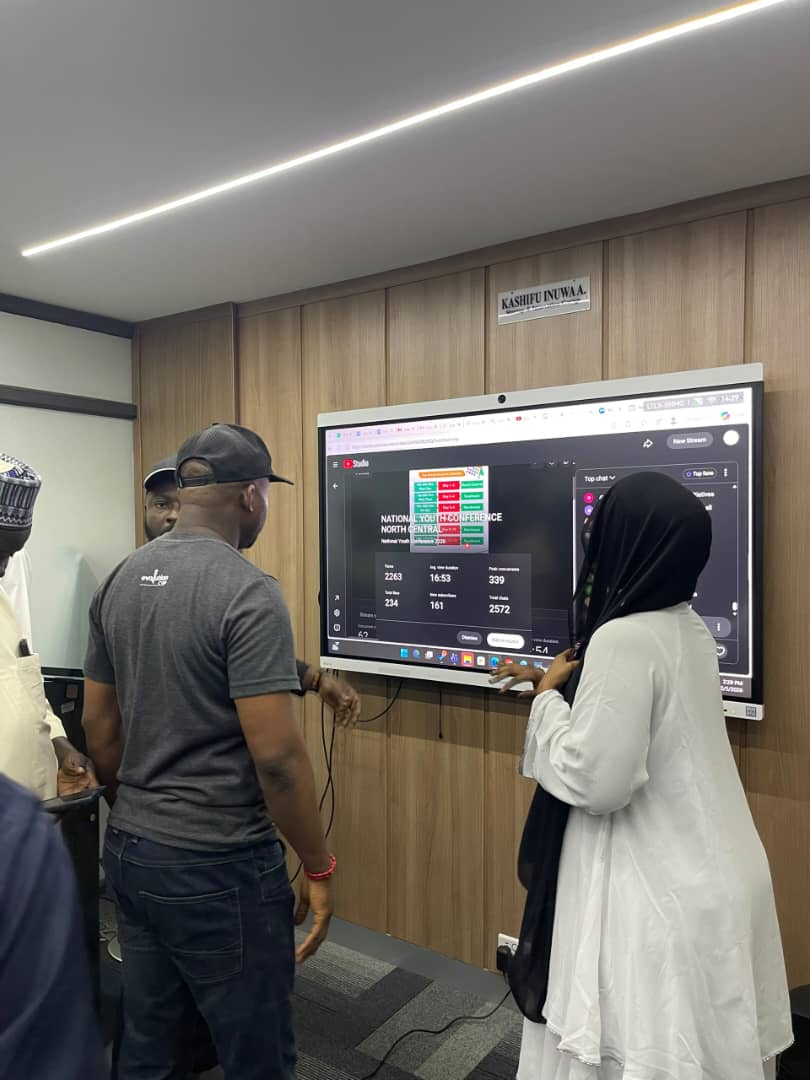
To support coordination of the exercise, officials established a monitoring centre to track virtual activities and address operational issues that could arise during the sessions.
Nwaka led the monitoring team at the situation room, alongside Segun Dada, Senior Special Assistant to the President on New Media and Chairman of the Sub-Committee on Media.
Other support personnel were also assigned to help coordinate the programme and ensure participants could take part effectively from their respective locations.
Nwaka said the initiative gives young Nigerians an opportunity to participate in national conversations in a more structured way.
Rather than limiting youth engagement to expressing grievances, he said the confab should encourage participants to develop constructive proposals and practical approaches to some of the challenges confronting the nation.
He described the initiative as a significant opportunity for young Nigerians to become more involved in conversations surrounding governance and national development.
Discussions under the confab are expected to cover areas of direct concern to young Nigerians, including employment, education, technology, economic opportunities, governance and social inclusion.
The engagement also gives participants a platform to share experiences from their communities and identify challenges that may require greater attention from policymakers.
Nwaka commended the officials and volunteers who organised the first virtual session, particularly members of the Sub-Committee on Contacts and Mobilisation, for their efforts.
He said the successful launch of the online component was encouraging, considering the scale of the programme and the challenge of coordinating participants across several locations.
Among those involved in monitoring and coordinating the exercise were Engr. Ubah Ibrahim, Gloria Ojonugwa, Seun Okunola, Amarah Joseph, Clever Waka, Rose Nwokeocha, Peace Solomon and Comrade Shuiabu Abdulrasheed.
A representative of persons with disabilities, identified as Fauziyat, also took part in the monitoring exercise.
For the organisers, the confab’s importance will be measured not only by the number of youths who participate, but also by the quality and usefulness of the recommendations generated through the process.
Nwaka described the initiative as an important opportunity for the government and young Nigerians to engage in direct dialogue. He also referred to the confab as the best gift President Bola Tinubu has given Nigerian youths to dialogue.”
CYMS said the online engagement would continue as the broader confab process progresses.
Stakeholders are expected to build on the issues raised during the opening sessions and develop recommendations that capture young Nigerians’ concerns and expectations.
The virtual format also allows the organisers to reach participants beyond physical meeting locations, potentially allowing a wider range of young people to contribute to the national conversation.
As consultations continue, the focus will increasingly shift to how the ideas emerging from the different sessions can be consolidated into practical recommendations that contribute to Nigeria’s development and strengthen youth participation in national affairs.
