




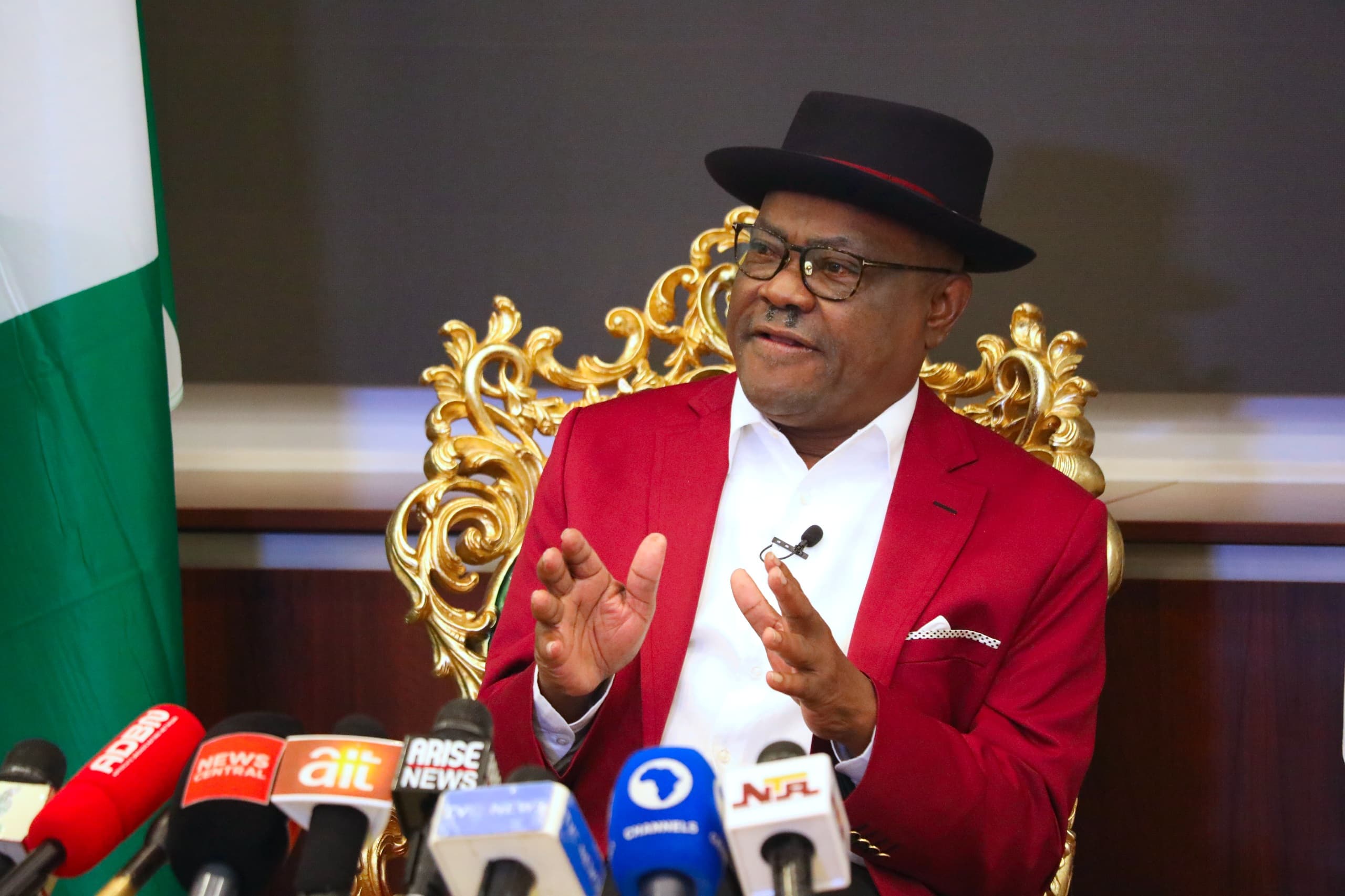
The Minister of the Federal Capital Territory (FCT), Nyesom Wike, has described the strike declared by the FCT chapter of the Nigeria Labour Congress (NLC) as politically motivated, insisting that the issues raised by the union were already being addressed by the administration.
Wike made the position known during a press briefing in Abuja on Friday, October 9, 2026, following a closed-door meeting with Area Council chairmen and security operatives.
The minister also announced plans to enforce the “no work, no pay” policy across the Area Councils, arguing that the administration had met its obligations to local government workers and teachers.
The development has raised concerns about the potential impact of the industrial dispute on public education and the relationship between labour unions and the FCT Administration.
The minister maintained that there was no justification for the industrial action, claiming that the administration had been addressing the issues affecting primary and secondary education workers.
He also faulted the process through which the strike was declared, alleging that relevant authorities responsible for overseeing labour matters had not been adequately consulted.
“We want to state categorically and let it be known to the public that this so-called strike declaration is political, and we will not accept it,” Wike said.
He further claimed that major education bodies, including the Universal Basic Education Board (UBEB) and senior secondary school teachers, had distanced themselves from the action because existing agreements were being implemented.
However, the minister’s claims represent the administration’s position. The NLC’s specific grievances and response to the allegations would be necessary to establish a complete picture of the dispute.
Wike questioned the political neutrality of the FCT NLC chairman, Stephen Knabayi, alleging that his participation in the African Democratic Congress (ADC) during the last Area Council elections raised concerns about political influence in the union’s activities.
The minister accused the labour leadership of using the strike to create the impression that the administration had failed to maintain normal academic activities.
He said labour leaders who wished to participate actively in partisan politics should consider relinquishing their union leadership positions to avoid conflicts of interest.
“If you want to involve yourself in politics, you are free to, but then excuse yourself from the leadership of the union, so you don’t politicise it,” he said.
The dispute highlights the delicate relationship between organised labour, political interests and government institutions. While governments have a responsibility to maintain essential public services, workers also have legitimate channels to raise grievances and pursue collective bargaining.
A sustainable resolution would depend on meaningful engagement between the administration and union representatives, alongside clarification of any outstanding obligations.
Beyond the labour dispute, Wike directed security and relevant enforcement agencies to dismantle unauthorised commercial operations, particularly open-air beer parlours along the Guzape-Asokoro axis.
The minister said such businesses should be removed before they develop into security concerns.
The directive forms part of the administration’s broader efforts to regulate commercial activities and address security challenges within the capital. Effective implementation, however, will require clear enforcement procedures and compliance with applicable regulations.
The minister also criticised what he described as insufficient action by the Independent National Electoral Commission (INEC) over inflammatory political statements.
He questioned the commission’s response to comments attributed to ADC vice-presidential candidate Rotimi Amaechi concerning President Bola Tinubu and his supporters.
Wike urged political parties and candidates to focus on policy proposals and public issues rather than personal attacks.
He also called on journalists to investigate allegations concerning projects and financial decisions during Amaechi’s tenure as governor of Rivers State.
Among the issues he raised were a reported $10 million fumigation contract, the ₦68 billion monorail project, the sale of a gas turbine reportedly valued at $308 million, and questions surrounding a hospital project.
The minister challenged the media to seek explanations about the projects and their outcomes.
These claims and questions require independent verification and responses from the individuals and institutions concerned. Their inclusion reflects Wike’s allegations and does not, by itself, establish wrongdoing.
Wike warned that continued personal attacks could provoke political resistance, particularly in Rivers State, and urged opposition figures to concentrate on presenting policies and alternatives to voters.
His remarks underscore the growing importance of accountability and responsible political communication as parties prepare for future electoral contests.
For residents of the FCT, however, the immediate concern remains the teachers’ strike and its potential consequences for pupils, parents and public schools.
The priority will be whether the administration and labour representatives can resolve their differences through dialogue, clarify outstanding commitments and minimise disruption to education.
While Wike insists that the strike is politically motivated, a transparent account of the union’s demands and the administration’s response will be essential to resolving the dispute fairly.
