




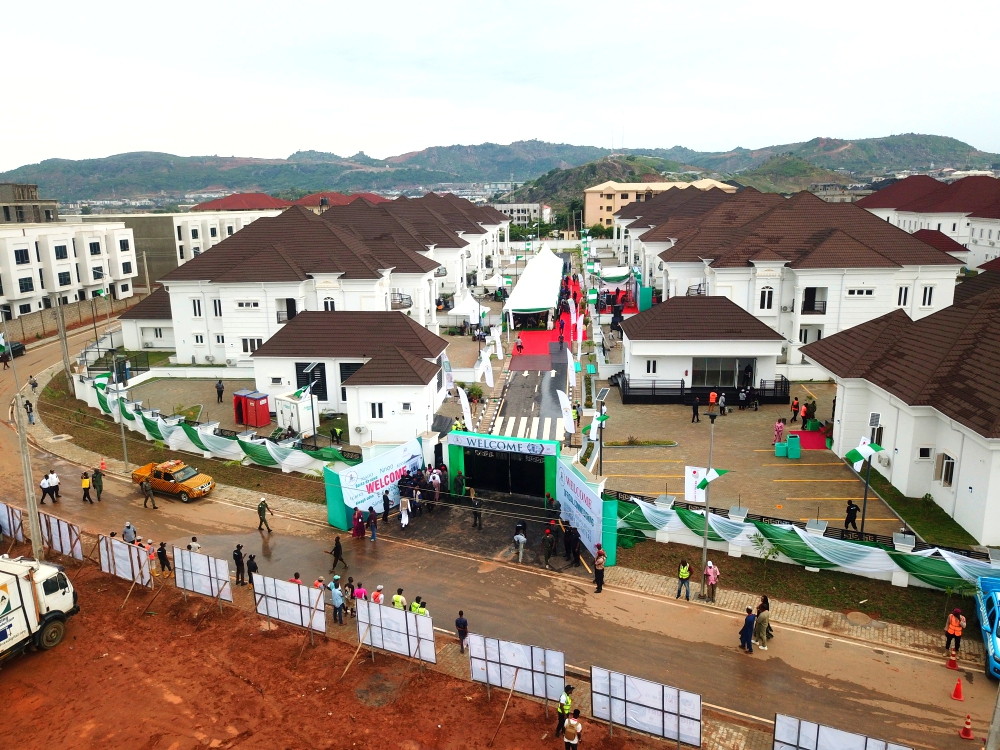
President Bola Ahmed Tinubu has commissioned 10 newly constructed residential units for judges of the Federal High Court in Katampe District, Abuja, reaffirming his administration’s commitment to strengthening judicial independence and improving the welfare of judicial officers.
The commissioning ceremony formed part of activities marking the third anniversary of the Tinubu administration. Represented by Vice President Kashim Shettima, President Tinubu described the project as a strategic investment aimed at providing a secure and dignified environment for members of the judiciary.
According to the President, the delivery of the residences demonstrates the Federal Government’s determination to uphold the integrity and independence of the judicial arm by ensuring that judges work under conditions that guarantee security, comfort and stability.
He stressed that effective justice delivery depends not only on institutional structures but also on the welfare of those entrusted with interpreting the law.
President Tinubu noted that judicial independence is strengthened when judges are provided with the necessary support to discharge their duties without fear or external pressure. He added that the housing project represents a commitment to protecting the dignity of judicial officers and enhancing public confidence in the justice system.
The President also commended the Minister of the Federal Capital Territory (FCT), Nyesom Wike, for successfully delivering the project, describing his performance as evidence that results remain the most important measure of public service.
He urged the beneficiaries of the residences to continue upholding the principles of fairness, transparency and impartiality, emphasizing that improved welfare should translate into efficient justice delivery for Nigerians.
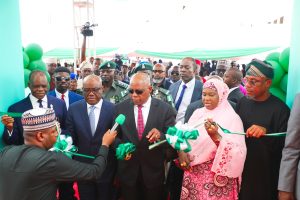
Speaking during the event, FCT Minister Nyesom Wike disclosed that the newly inaugurated Federal High Court judges’ residences came barely 24 hours after the commissioning of quarters for Court of Appeal judges.
He announced that another set of 20 housing units for judges of the FCT High Court would be inaugurated on July 7, adding that efforts are ongoing to develop a dedicated “Judges’ Zone” in the nation’s capital.
According to the minister, construction of residential quarters for judges of the National Industrial Court and the Code of Conduct Tribunal is currently underway and expected to be completed by January 2027.
Wike explained that the decision to establish a Judges’ Zone is aimed at creating a secure and conducive environment for judicial officers while promoting institutional efficiency.
He revealed that the FCT Administration plans to remove nearby high-rise structures considered threats to the security and privacy of the judges’ quarters. A dedicated police station would also be constructed within the area to provide additional protection for residents.
The minister said he personally monitored the progress of the project through regular site visits to ensure timely delivery despite challenging weather conditions.
He further disclosed that the contractor had been directed to maintain the facility for six months after completion to preserve the quality of the infrastructure.
Addressing criticisms over the acquisition of land for the project, Wike defended the administration’s decision to reclaim undeveloped plots that had remained unused for about 15 years.
He dismissed allegations that the exercise amounted to a land grab, insisting that the action was carried out in the interest of public development and institutional growth.
According to him, increased construction activities and renewed real estate development in the area demonstrate that the government’s actions were aimed at promoting national development rather than private interests.
Wike also highlighted the impact of road infrastructure projects earlier commissioned by President Tinubu in Katampe District, noting that they have contributed significantly to transforming the area and improving accessibility.
He expressed appreciation to the President for providing the opportunity and support needed to execute major infrastructure projects in the Federal Capital Territory.
Minister of State for the FCT, Dr. Mariya Mahmoud, praised President Tinubu for supporting initiatives that strengthen key institutions of government.
She described the provision of modern accommodation for judges as a clear demonstration of the administration’s commitment to the rule of law and institutional excellence.
Mahmoud also commended Wike for his dedication to infrastructure development across Abuja, stating that the newly commissioned residences would enhance the welfare of judicial officers and contribute to improved justice delivery.
She noted that the project would stand as a lasting symbol of a government committed to strengthening democratic institutions.
Chief Judge of the Federal High Court, Justice John Terhemba Tsoho, expressed gratitude to the Federal Government and the FCT Administration for completing the project exactly one year after its foundation-laying ceremony.
He noted that despite criticisms and public scrutiny, the project was completed as promised, demonstrating commitment and effective leadership.
Justice Tsoho said improved welfare for judicial officers would further strengthen the administration of justice and reinforce the rule of law in Nigeria.
Presenting an overview of the project, Executive Secretary of the Federal Capital Development Authority (FCDA), Engr. Richard Yunana Dauda, said the initiative aligns with the agency’s mandate of providing public infrastructure and facilities.
He explained that the project comprises 10 fully furnished five-bedroom duplexes, each with boys’ quarters and modern amenities designed to provide secure and comfortable accommodation for Federal High Court judges.
According to him, the facilities include a 150-capacity event centre, a neighbourhood shop, gatehouse, generator house with power generators, recreational grounds, landscaping, perimeter fencing, asphalt-paved roads, walkways, drainage systems, electricity supply and water infrastructure.
Dauda noted that the project was conceived to create a functional residential environment that would support the smooth and effective administration of justice in Nigeria.
