





President Bola Ahmed Tinubu has commissioned a newly constructed residential estate for Justices of the Court of Appeal in Abuja, describing the project as a major investment in judicial independence, welfare and the rule of law in Nigeria.
The commissioning ceremony, held on June 16, 2026, in Katampe District of the Federal Capital Territory (FCT), formed part of activities marking the third anniversary of the Tinubu administration. The project comprises 10 fully furnished five-bedroom duplexes, each with attached three-bedroom domestic staff quarters, alongside supporting infrastructure designed to provide a secure and comfortable living environment for appellate court judges.
Represented at the event by the Attorney General of the Federation and Minister of Justice, Chief Lateef Fagbemi (SAN), President Tinubu said the development demonstrates the federal government’s commitment to strengthening democratic institutions through improved support for the judiciary.
According to the President, judicial officers play a critical role in sustaining democracy, protecting constitutional rights and ensuring justice for all citizens. He emphasized that creating an enabling environment for judges is essential to improving the effectiveness and integrity of the justice system.
President Tinubu noted that the welfare of judicial officers should not be viewed as a privilege but as a strategic investment in national stability and good governance.
He explained that secure accommodation, modern infrastructure and institutional support enable judges to perform their duties effectively while safeguarding judicial independence.
“A strong judiciary remains the foundation of democratic governance, economic growth and social stability,” the President said. “When judicial officers are provided with the resources they need, the entire justice system becomes stronger, and the benefits extend to society as a whole.”

The President also revealed that the housing project was funded through a special federal intervention initiative separate from statutory allocations to the judiciary, adding that judicial funding has witnessed significant improvements under the current administration.
He praised Federal Capital Territory Minister Nyesom Wike for overseeing the successful delivery of the project and commended his commitment to implementing key government directives.
President Tinubu used the occasion to urge state governments across the country to prioritize investments in judicial infrastructure and welfare within their jurisdictions.
He stressed that strengthening the judiciary should be a shared responsibility between federal and state authorities, noting that adequate funding, infrastructure and institutional support are necessary for efficient justice delivery.
“The responsibility of supporting the judiciary does not belong to the Federal Government alone,” he said. “State governments also have a constitutional obligation to ensure their courts are properly equipped and adequately funded.”
The President added that improved judicial infrastructure contributes directly to peace, stability and economic confidence by strengthening public trust in the legal system.
Earlier in his remarks, FCT Minister Nyesom Wike disclosed that the land on which the judges’ quarters were built had originally been allocated to a private construction company more than a decade ago but remained undeveloped.
According to him, the FCT Administration revoked the allocation after determining that the land had not been utilized for its intended purpose.
Wike recalled facing criticism following the revocation, with some observers alleging improper motives. However, he said the completed project demonstrates that the decision was made solely to advance public interest and provide critical infrastructure for judicial officers.
He noted that the administration is also acquiring surrounding properties through lawful compensation arrangements to create an additional security buffer around the estate.
The minister emphasized that ensuring the safety and welfare of judges remains a priority because of the sensitive nature of their responsibilities.
He also encouraged judicial authorities to establish a strong maintenance culture to preserve the estate and ensure its long-term value.
President of the Court of Appeal, Hon. Justice Monica Dongban-Mensem, described the commissioning as a landmark achievement for the judiciary.
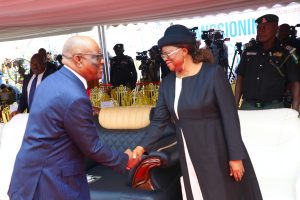
She noted that the event coincided with the 50th anniversary of the Court of Appeal, making it particularly significant for the institution.
According to her, quality residential accommodation contributes directly to judicial effectiveness by providing judges with a secure and peaceful environment that supports research, reflection and decision-making.
Justice Dongban-Mensem expressed appreciation to President Tinubu and the FCT Administration for delivering a project that she said reflects respect for the judiciary and recognition of its constitutional role.
She added that enhanced welfare measures help protect judicial officers from external pressures and strengthen public confidence in the justice system.
The President of the National Industrial Court of Nigeria, Hon. Justice Benedict Kanyip, also commended the initiative and welcomed the simultaneous groundbreaking ceremony for residential quarters intended for judges of the National Industrial Court and the Code of Conduct Tribunal.
He described the development as evidence of a forward-looking approach to judicial administration and infrastructure planning.
Justice Kanyip said providing dedicated accommodation for judicial officers contributes to improved productivity and supports the efficient administration of justice.
Providing an overview of the project, Executive Secretary of the Federal Capital Development Authority (FCDA), Engr. Richard Yunana Dauda, explained that the estate forms part of a broader initiative to construct 40 residential units for judicial officers in Katampe District.
The 10 completed residences commissioned during the ceremony were specifically developed for Court of Appeal justices.
He stated that the project was designed to provide safe, functional and comfortable accommodation capable of supporting judicial officers in carrying out their duties effectively.
The estate includes fully furnished duplexes, domestic staff quarters, a neighborhood shopping facility, a gatehouse, landscaped surroundings, recreational spaces, perimeter fencing and modern utility infrastructure.
Additional features include paved internal roads, pedestrian walkways, electricity supply systems, water reticulation networks and a 150-capacity event center.
According to Dauda, the project represents a significant contribution to strengthening the justice sector through improved infrastructure.
Speaking on behalf of the project contractor, Architect Akor Adapoyi, Managing Director of Details-2-Dot, expressed appreciation to the FCT Administration for the opportunity to execute the project.
He said the company was honored to contribute to the development of a residential estate designed specifically for senior judicial officers.
Adapoyi noted that the Court of Appeal occupies a vital position within Nigeria’s justice system and deserves facilities that reflect the importance of its responsibilities.
He added that the project was completed with a focus on quality, functionality and long-term sustainability.
The commissioning of the Court of Appeal Judges’ Quarters represents another milestone in ongoing efforts to modernize critical public infrastructure in the Federal Capital Territory.
Observers at the event noted that investments in judicial welfare and infrastructure can contribute significantly to strengthening institutional independence, improving efficiency and enhancing public confidence in the legal system.
As Nigeria continues efforts to deepen democratic governance and improve public service delivery, stakeholders say projects such as the Katampe judicial estate demonstrate the importance of investing in institutions that uphold justice, accountability and the rule of law.
With additional judicial housing projects already underway, government officials expressed confidence that the initiative will further support the administration of justice and contribute to the long-term development of Nigeria’s legal system.
