




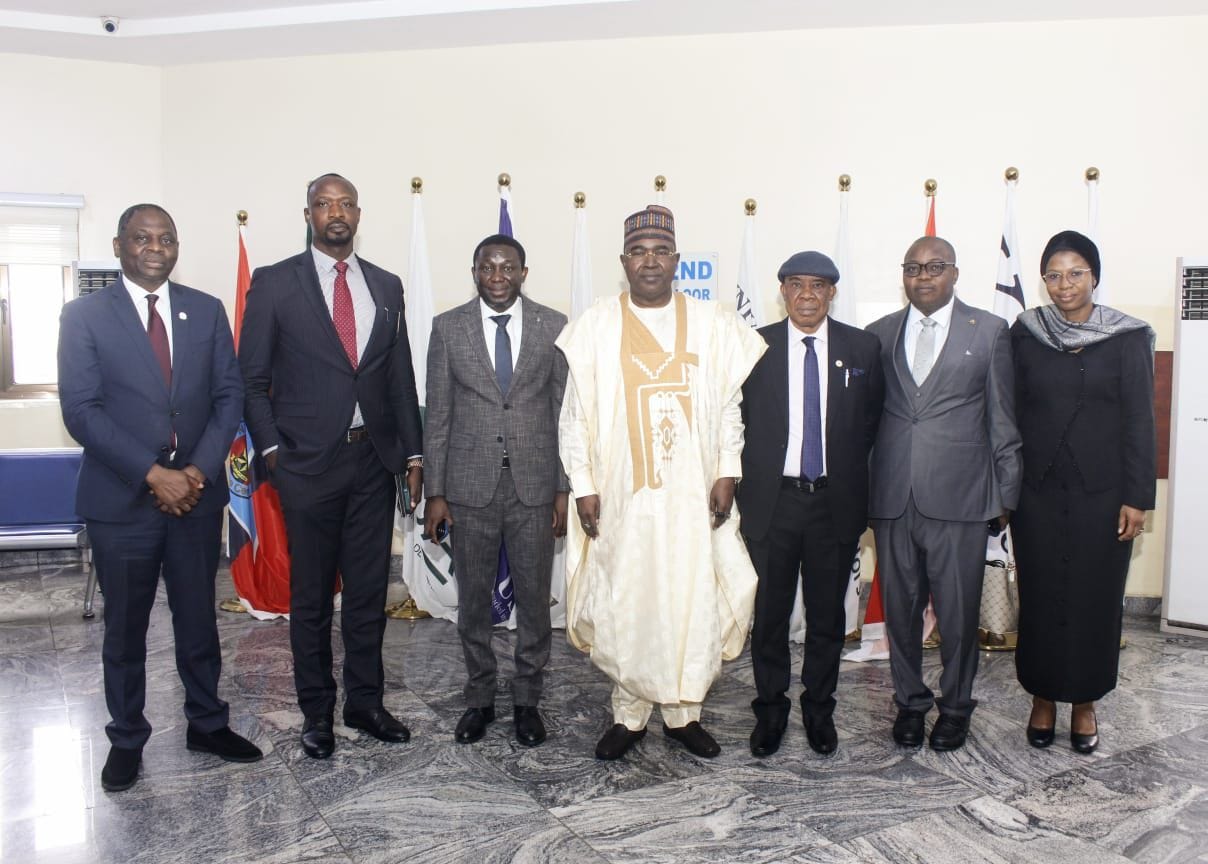
The National Drug Law Enforcement Agency, NDLEA, is intensifying its campaign against drug trafficking by going after the money, assets and financial networks that sustain criminal organisations.
Chairman and Chief Executive of the agency, Brigadier General Mohamed Buba Marwa (Rtd), said Nigeria’s fight against narcotics cannot depend on arrests and drug seizures alone, arguing that traffickers must also be deprived of the wealth and resources that allow their operations to continue.
Marwa spoke in Abuja on Wednesday, September 2, 2026, while declaring open an advanced training programme for investigators, prosecutors and partner agencies on financial investigations, asset tracing, forfeiture, recovery and management of proceeds linked to narcotics trafficking and organised crime.
According to the NDLEA chairman, drug trafficking should be treated not merely as a criminal activity involving couriers and shipments, but as a wider economic enterprise supported by financiers, money launderers, facilitators and professional enablers.
“If we arrest the courier but leave the financier untouched, seize the drugs but allow the proceeds to remain with the criminal enterprise, or secure a conviction without recovering the illicit wealth, we have addressed only part of the problem,” Marwa said.
The new emphasis represents an important shift in enforcement strategy.
Traditional drug operations often focus heavily on intercepting consignments and arresting suspects. Marwa said those measures remain important, but they do not necessarily destroy the financial structure of trafficking organisations.
He said criminal networks are becoming increasingly sophisticated, using technology, cryptocurrencies, corporate structures and legitimate businesses to conceal the origins and ownership of illicit funds.
This, he noted, requires investigators and prosecutors to develop stronger skills in analysing financial transactions, identifying beneficial ownership, tracking assets across borders and using digital evidence to build cases that can support forfeiture and recovery.
Marwa said the NDLEA’s next major priority, after progress in seizures and prosecutions, is to make drug trafficking a high-risk and low-profit activity.
“We must move from crime detection to crime disruption; from arresting offenders to dismantling criminal enterprises; and from confiscating drugs to depriving traffickers of the wealth that motivates and sustains their activities,” he said.
The NDLEA chairman also warned that narcotics trafficking does not operate in isolation.
He said drug networks can intersect with money laundering, corruption, cybercrime, human trafficking, illicit arms trafficking and other forms of organised criminal activity.
That overlap, according to Marwa, makes cooperation between different institutions essential.
He called for closer coordination within the NDLEA itself, particularly among its intelligence, investigation, prosecution, forensics, financial investigation and asset management units.
He said the various directorates should function as parts of one enforcement chain rather than as isolated departments.
The same principle, he added, should apply across government agencies because no single institution possesses all the information, expertise or capacity needed to confront complex criminal networks.
Representatives of the Economic and Financial Crimes Commission, EFCC, the Independent Corrupt Practices and Other Related Offences Commission, ICPC, and the Nigeria Financial Intelligence Unit, NFIU, participated in the programme.
Judges of the Federal High Court were also present, reinforcing the connection between investigation, prosecution and adjudication.
The training brought together specialists from Nigeria and abroad.
Among the resource persons were retired United Kingdom Circuit Judge Michael Hopmeier; former ICPC Chairman Professor Bolaji Owasanoye, SAN; Director of Public Prosecutions of the Federation Rotimi Oyedepo, SAN; global anti-money laundering adviser Calvin Wilson; Asset Reality officials Jason Sandoval and Nick Francis; cryptocurrency expert Fernandez Marcus-Obiene; and crypto-police specialist Chioma Chikelu.
Their participation reflects the increasingly technical nature of financial crime investigations, particularly where digital assets, cross-border transactions and complex company ownership structures are involved.
The NDLEA chairman also stressed that asset recovery does not end when property is seized or forfeited.
He warned that poor management of recovered assets could reduce their value and weaken public confidence in the process.
For that reason, Marwa urged officers to ensure transparency and accountability from the point of seizure through forfeiture, management and eventual disposal or realisation of recovered assets.
He also told participants that the programme should not be treated as a routine training exercise.
Instead, he said knowledge gained should be shared across directorates and converted into coordinated operational action.
By the end of the programme, Marwa said he expected participants to be better prepared to follow money trails, identify assets, preserve evidence and strengthen forfeiture proceedings against traffickers and organised criminal networks.
The Chief Judge of the Federal High Court, Justice John Terhemba Tsoho, also commended the NDLEA’s direction.
In a goodwill message delivered on his behalf by Justice Inyang Ekwo, Tsoho said that stronger cooperation among the Federal High Court, NDLEA, and other law enforcement agencies could improve Nigeria’s international standing.
He said the subject of the training demonstrated how drug-related crimes have become increasingly broad and sophisticated, particularly where money laundering and cryptocurrency-enabled transactions are involved.
The Chief Judge also praised Marwa for what he described as progress recorded by the agency under his leadership.
The development matters because organised crime is sustained by money.
Arresting low-level operatives may disrupt individual operations, but criminal groups can often rebuild if their financial networks remain intact.
By tracing proceeds, freezing assets and identifying those who finance or profit from drug trafficking, authorities can potentially weaken the structures that allow criminal networks to survive.
For Nigerians, a more effective financial investigation system could also strengthen the fight against related crimes such as money laundering, corruption, cybercrime and illicit arms trafficking.
However, the approach will depend heavily on due process, credible evidence and transparent management of recovered assets.
Asset recovery can only strengthen public trust if investigations are lawful, forfeiture decisions are properly obtained and seized property is managed in a way that is open to scrutiny.
The NDLEA’s latest strategy therefore places equal emphasis on enforcement capacity and accountability.
If implemented effectively, the shift from simply intercepting drugs to dismantling the financial foundations of trafficking organisations could mark a significant step in Nigeria’s wider battle against organised crime.
