




The Federal Road Safety Corps (FRSC) has introduced tougher nationwide enforcement measures targeting fuel tanker operators, warning that any truck failing safety requirements will be denied access to load petroleum products, April 16, 2026.
The directive aims to reduce tanker-related accidents and improve safety across Nigeria’s petroleum distribution system, which depends largely on road transport.
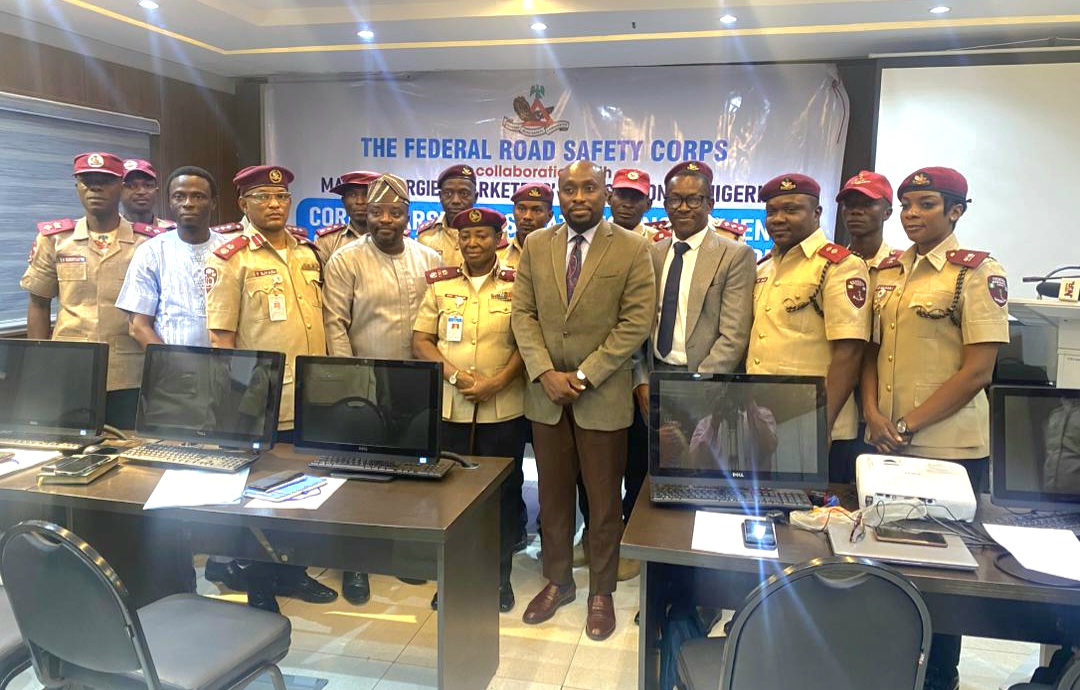
FRSC Corps Marshal Malam Shehu Mohammed announced the policy during the launch of the 2026 technical training programme for Safe-to-Load Desk Officers and marshals assigned to depots and terminals across the country. He said the agency would no longer tolerate safety violations within the sector.
According to Mohammed, enforcement will now cover all parties involved in tanker operations, including drivers, vehicle owners, depot managers and safety inspectors. He stressed that any breach of safety regulations would attract strict penalties.
Speaking through Zonal Commanding Officer Mrs Comfort Asom, Mohammed said deliberate tampering with speed limiters and other safety devices would lead to prosecution.
He added that tanker crashes would be thoroughly investigated to ensure accountability throughout the operational chain.
Nigeria relies on road transportation for more than 95% of its petroleum product distribution, a situation the FRSC described as high-risk. Mohammed said this reality makes strict monitoring and compliance essential to prevent accidents and protect lives.
The corps marshal noted that the Safe-to-Load Programme, introduced in 2015 following Nigeria’s adoption of international safety standards for transporting hazardous materials, has significantly improved compliance.
He said nearly all tanker drivers now possess the required Class G driver’s license, with compliance rising to 99.4% in 2025 from just over half when the programme began. In addition, most tankers have been fitted with approved leak-proof systems and standard safety components.
Despite these improvements, Mohammed expressed concern over recent tanker explosions reported in parts of the country, including Majia, Dikko Junction and Indorama. He said such incidents highlight the need for stricter enforcement and continuous monitoring.
FRSC data showed that 268 tanker crashes were recorded in 2025. While the number remains a concern, the corps reported a significant drop in fatalities and severity levels compared to the previous year.
Mohammed described the training programme as a key step toward strengthening enforcement capacity. He said the initiative is designed to equip officers with the skills needed to ensure compliance at depots and along major transport routes.
He added that the FRSC would increase surveillance using both physical inspections and technology-based monitoring systems.
Operators were also reminded to carry out regular maintenance on safety-critical equipment, including valves and manhole covers, to prevent mechanical failures.
The corps marshal commended regulatory agencies and industry groups for supporting safety improvements in petroleum transportation. He also acknowledged contributions from private sector partners involved in the training programme.
FRSC Sector Commander in the Federal Capital Territory, Tijjani Iliyasu, said safe transportation of petroleum products remains vital to Nigeria’s energy supply and economic stability.
He noted that the Safe-to-Load initiative was developed through collaboration between government agencies and industry stakeholders to address risks associated with tanker operations.
“This programme reflects a shared commitment to ensuring safer roads and more efficient transport systems,” Iliyasu said.
Industry representatives also called for stronger cooperation among stakeholders.
Moses Oko, speaking on behalf of the Major Energy Marketers Association of Nigeria, said achieving zero tanker crashes requires contributions from multiple sectors.
He emphasised the role of urban planners in designing safer communities, engineers in building reliable infrastructure and road users in obeying safety regulations.
“Safety is a shared responsibility. Every stakeholder has a role to play in preventing accidents,” Oko said.
Also speaking, Engr. Oyedeji Ifeoluwa of TotalEnergies Nigeria Plc highlighted the importance of continuous training and the adoption of modern safety technologies.
He said the company has consistently supported FRSC capacity-building efforts, including training programmes for officers and operators over the years.
According to Ifeoluwa, TotalEnergies recently organised another training session for FRSC personnel to update their knowledge and align with current safety standards.
He reaffirmed the company’s commitment to working with regulators and industry partners to improve safety in petroleum transportation.
Mohammed urged all stakeholders to remain committed to enforcing safety regulations, expressing confidence that the new measures and training efforts would further reduce accidents and improve compliance nationwide.
