





The Federal Capital Territory Administration (FCTA) says it is working to complete the long-awaited relocation of traders from the Apo Mechanic Village to their permanent site in Wasa District before the end of 2026, while also preparing to enforce stricter restrictions on commercial motorcycles (Okada) and tricycles (Keke Napep) within Abuja’s city centre.
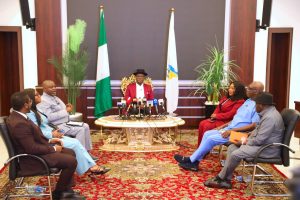
The announcements were made by the Minister of the Federal Capital Territory, Chief Nyesom Wike, during a media parley held on Tuesday at his official residence in Life Camp, Abuja, where he outlined the administration’s ongoing urban renewal, land administration, transportation and security initiatives.
According to the minister, the government has completed the essential infrastructure at the new Wasa District relocation site, paving the way for thousands of mechanics, automobile spare parts dealers and other traders to move into a more organised environment.
However, Wike explained that the final stage of the relocation depends on the completion of a Memorandum of Understanding (MoU) between the government and the various trader associations.
He said the agreement is intended to ensure that the FCTA retains regulatory oversight of the new settlement rather than transferring unrestricted ownership immediately through Certificates of Occupancy (C of O).
The minister acknowledged that disagreements among different trader associations have slowed discussions but expressed confidence that the outstanding issues would be resolved before the end of the year.
The relocation of the Apo Mechanic Village has been one of Abuja’s longest-running urban development issues. Successive administrations have attempted to move traders from the densely populated settlement to a planned location with better infrastructure, improved sanitation and safer working conditions. The latest update suggests the project is entering its final implementation phase after years of delays.
Beyond the relocation exercise, Wike used the briefing to urge residents occupying land allocated through Area Councils to regularise their documents with the FCTA.
He referenced the Supreme Court’s decision affirming that authority over land administration in the Federal Capital Territory rests solely with the FCTA.
According to him, residents who obtained land through Area Councils still have an opportunity to legalise their ownership by obtaining Certificates of Occupancy through the regularisation programme.
The minister disclosed that the administration has already approved between 5,000 and 6,000 regularised land titles, describing the initiative as an effort to protect property owners while strengthening Abuja’s land administration system.
For many residents, land documentation remains a major concern due to overlapping allocations, legal disputes and uncertainty surrounding ownership. The regularisation programme is expected to provide greater legal certainty for homeowners and investors.
Wike also highlighted government intervention at River Park Estate, where the FCTA stepped in to assist homeowners affected by expired leases and disputes involving private developers.
Rather than allowing innocent buyers to suffer financial losses, the administration granted Certificates of Occupancy directly to eligible homeowners, a move the minister described as a people-centred solution to a complex property dispute.
The intervention reflects a broader effort by the administration to resolve long-standing housing and land ownership challenges affecting residents across the Federal Capital Territory.
The minister identified recently completed projects, including the upgraded Abuja City Gate and expanded rural water supply initiatives, as part of the administration’s broader urban renewal programme.
He noted that the renovated City Gate has quickly become an important landmark for residents and visitors while symbolising ongoing efforts to improve Abuja’s image as Nigeria’s capital city.
Attention is also shifting toward abandoned recreational facilities.
Wike announced plans to revive the Life Camp Recreation Centre and redevelop the Jabi Lake Recreational Park through partnerships with private investors.
According to him, future agreements with developers will include strict timelines to ensure projects are completed within agreed periods. He warned that any investor who fails to deliver after receiving government approval risks losing the land allocated to them.
The minister criticised situations in which public land remained undeveloped for more than a decade, arguing that such delays undermine economic growth, tourism potential, and public confidence.
On infrastructure delivery, Wike reaffirmed the administration’s policy of awarding only projects backed by available funding.
He explained that ensuring adequate financial backing before awarding contracts is intended to minimise abandoned projects and improve confidence among contractors.
The minister, however, acknowledged that large-scale national projects such as the Millennium Tower require direct federal budget support due to their scale and the impact of rising construction costs.
The approach aligns with growing calls for more prudent public spending and improved project management across Nigeria’s public sector.
One of the most significant announcements from the media briefing concerned the operation of commercial motorcycles and tricycles within Abuja.
The minister disclosed that the FCT Security Council has approved fresh restrictions on Okada and Keke Napep operations in designated parts of the city.
Security agencies have been directed to identify districts where vehicles will no longer be permitted, particularly in central business and administrative areas.
According to Wike, the decision was informed not only by traffic management concerns but also by increasing security challenges.
He stressed that the administration does not intend to prohibit commercial motorcycles and tricycles across the entire Federal Capital Territory because many satellite communities still depend heavily on them for transportation.
Instead, enforcement will focus on sensitive locations where security agencies believe unrestricted operations present greater risks.
The minister also confirmed that security personnel continue operations against illegal settlements and criminal hideouts in locations including Karmajiji in Kukwaba District as part of broader efforts to improve public safety.
Responding to concerns over reckless driving and organised car racing in residential neighbourhoods, Wike announced that the FCTA has established a committee to examine the issue and recommend appropriate measures.
He said the administration remains committed to protecting residents and will not allow activities that endanger lives or disrupt public order.
The latest announcements reflect the FCTA’s attempt to balance infrastructure development, urban planning and public safety while addressing long-standing administrative challenges.
For residents, the relocation of Apo Mechanic traders could improve traffic flow, environmental conditions and business organisation. Land regularisation offers greater legal protection for thousands of property owners, while the redevelopment of recreational facilities could enhance tourism, investment and quality of life.
At the same time, stricter restrictions on commercial motorcycles and tricycles may improve security in central Abuja. Still, they could also require careful implementation to minimise disruption for commuters who depend on these services.
As the administration approaches the end of 2026, the success of these initiatives will likely be measured not only by policy announcements but also by their timely execution and impact on residents and businesses across the Federal Capital Territory.
