




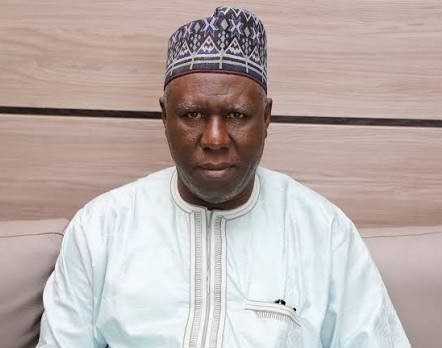
Ahmad I. Sajoh, an Adamawa State political commentator and Head of Media and Publicity of the Adamawa Progressive Elders Council, has declared his support for President Bola Ahmed Tinubu ahead of Nigeria’s 2027 presidential election, while calling for the campaign to focus more on policy, security, jobs and the economy.
In an opinion article titled “Why I Will Stand With Tinubu in 2027,” Sajoh acknowledged his personal and regional ties to former Vice President Atiku Abubakar but argued that such considerations should not determine his political choice.
Sajoh described himself as a “son of Adamawa” and expressed respect for Atiku, who is also from the state. He nevertheless said political decisions should be based on competing ideas and records rather than kinship or personal relationships.
His intervention comes as political debate intensifies ahead of the 2027 general election. The Independent National Electoral Commission’s current election information lists the presidential and National Assembly elections for January 16, 2027.
One of Sajoh’s central arguments concerns political mentorship and leaders’ ability to develop people who later occupy important positions.
He cited several political figures who, in his assessment, benefited from alliances or political platforms associated with Tinubu over the years. He argued that the quality of people surrounding a president can influence the effectiveness of an administration.
These conclusions represent Sajoh’s assessment rather than an objective measure of either politician’s record. Supporters of Atiku may point to his own decades in politics, business, public service and party organisation when assessing his leadership credentials.
Sajoh also contrasted the political movements of both men, arguing that Tinubu had remained within a broadly progressive political tradition while criticising Atiku’s movement between different political parties.
Atiku is currently the presidential candidate of the African Democratic Congress, ADC, according to recent public statements from his campaign reported by Channels Television.
A substantial part of Sajoh’s argument focused on petroleum policy.
He criticised Atiku’s proposal for a new form of targeted fuel subsidy, arguing that it raises questions about implementation, market incentives and Nigeria’s existing petroleum laws.
Atiku’s camp, however, says the proposal should not be confused with Nigeria’s previous import-based subsidy arrangement.
Under the Atiku Economic Recovery Plan, the former vice president proposes a targeted, capped intervention to support domestic refining, accompanied by auditing and an exit mechanism. His representatives say the objective is to reduce production costs and eventually lower energy prices for consumers.
That disagreement could become an important economic policy debate as Nigerians weigh the effects of subsidy removal against competing proposals for reducing energy costs.
Despite supporting Tinubu’s continuation in office, Sajoh did not dismiss the economic difficulties many households face.
He acknowledged pressure from food prices, poverty and insecurity, particularly in northern communities, while arguing that the administration’s reforms should be assessed alongside economic indicators and increased revenues available to governments.
Those claims are likely to remain contested during the campaign, with government supporters pointing to macroeconomic reforms while opposition parties focus on living costs, purchasing power and the day-to-day experience of households.
Perhaps the broader point in Sajoh’s intervention was his call for political campaigns to move beyond personal allegations and concentrate on specific policy proposals.
He identified security, food production, electricity, fiscal federalism, employment and petroleum pricing as issues he believes presidential candidates should be challenged to address publicly and in detail.
For Nigerians, that call is significant because the 2027 contest will involve decisions about how the country responds to economic hardship, insecurity, energy shortages and unemployment.
Sajoh has made his own political preference clear. The wider electorate, however, will have to assess competing claims from Tinubu, Atiku, and other candidates regarding their records, proposals, and ability to deliver measurable results.
As the campaign develops, the quality of the debate may depend on whether candidates and their supporters can move from political rivalry to detailed explanations of what they intend to do differently and how they would fund and implement their proposals.
