




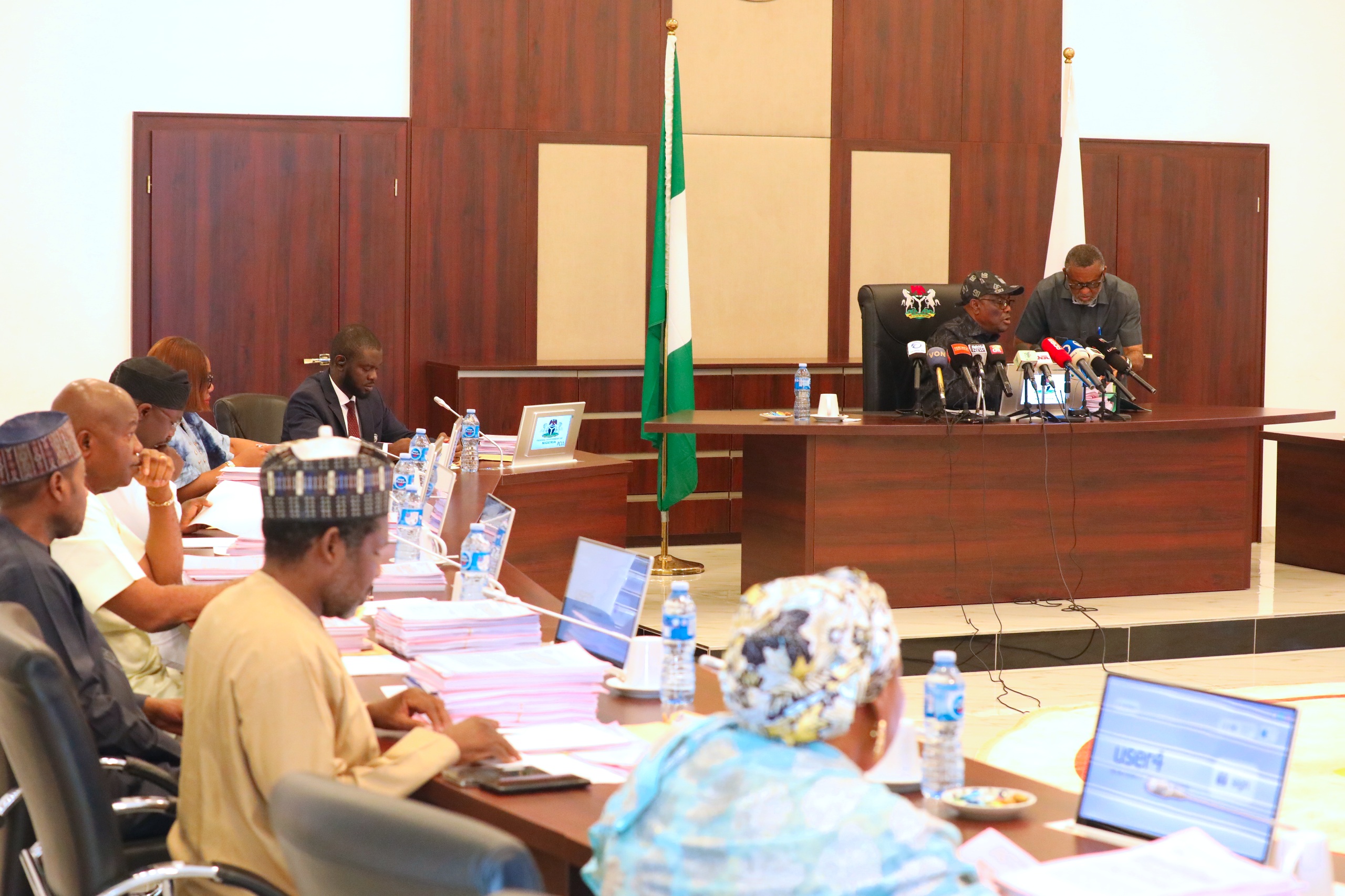
The Federal Capital Territory Administration has approved the immediate resumption of work on the long-abandoned Utako General Hospital, along with the renovation and modernisation of existing general hospitals across the FCT, as part of a wider package of health, security, justice, and infrastructure interventions.
The council reached the decisions at the 19th FCT Executive Council meeting, chaired by FCT Minister Nyesom Wike and attended by the Minister of State, Dr Mariya Mahmoud. According to the administration, the council considered 20 memoranda from different secretariats, departments and agencies.
The breadth of the approvals points to an approach that combines investment in Abuja’s established districts with projects intended to improve services in satellite communities.
The Mandate Secretary of the FCT Health Services and Environment Secretariat, Dr Adedolapo Fasawe, said work would resume immediately on the Utako General Hospital.
The approved intervention covers construction, equipping and staffing of the facility, which has remained unfinished for years.
The administration also approved the renovation, rehabilitation and re-equipping of the FCT’s 14 existing general hospitals. The work is expected to include new X-ray machines, diagnostic equipment and improvements to hospital theatres.
Fasawe said the objective is to improve access to quality, affordable and accessible healthcare for residents.
The practical impact, however, will depend not only on completed buildings and equipment but also on adequate staffing, maintenance and effective use of the upgraded facilities. The FCTA said staffing is part of the Utako intervention, while the health secretary also highlighted the administration’s continuing financial obligations to health insurance providers and HMOs.
The EXCO also approved the digital transformation of the FCT High Court, covering about 67 courtrooms across its judicial divisions.
According to the administration, the project will introduce electronic court recording and automated case-management systems, replacing much of the manual documentation and handwritten proceedings.
If implemented effectively, digital records could improve access to case information, reduce administrative delays and strengthen record management. The initiative’s success will depend on reliable infrastructure, training, and sustained technical support.
Security infrastructure in rural and satellite communities also featured prominently.
FCT Security Department Director Adamu Gwary said the council approved a fresh six-month contract for security infrastructure at the newly established Wasa informal sector, including a police station intended to serve the wider area.
The administration is also pursuing the construction of two furnished divisional police headquarters and six-man staff quarters in each of the FCT’s six Area Councils. Gwary said facilities at Ushafa and Saburi had already been delivered, while other projects were at various stages of completion.
In the education sector, the EXCO approved the procurement of examination materials for primary, junior secondary and senior secondary schools in the FCT.
Education Secretary Danlami Hayyo said the measure was intended to support smooth examinations amid increased enrolment in public schools following renovations and classroom improvements.
He also said the administration had funded 40 per cent of Area Council teachers’ arrears entitlement and maintained a ₦2 billion monthly intervention fund, measures he said aimed to support teachers’ welfare and industrial harmony.
Infrastructure projects approved or ratified by the council included a ₦5.3 billion contract awarded to CGC Nigeria Limited for an eight-month construction of a 33KVA power supply line from Dawakinchi to Tokulo and neighbouring villages in Bwari.
The council also ratified completed projects by Setraco Nigeria Limited, including the Gaba/Tokulo Road with a two-span river bridge in Bwari and the ₦8.8 billion Paikon Kore/Ibwa Road rehabilitation in Gwagwalada.
These projects are particularly significant for satellite communities, where reliable electricity and road connections can influence access to schools, healthcare, markets and other services.
The approvals extended to land administration and environmental management.
The Land Administration Department received approval for utility vehicles, a hardware and data-centre upgrade for integrated ICT operations, and the production of security-enhanced revenue receipts by the Nigerian Security Printing and Minting Company.
The measures are intended to strengthen administrative efficiency and reduce opportunities for fraudulent revenue documentation.
Meanwhile, the Abuja Metropolitan Management Council received approval for six environmental initiatives covering solid-waste collection, waterway desilting, maintenance of common waste dumps and modular hybrid solar street lighting.
The FCT Water Board also received approval for contracts for high-test hypochlorite powdered chlorine for water treatment, as well as renewed comprehensive insurance coverage for the Lower Usuma Dam treatment plant.
Taken together, the decisions span healthcare, justice, security, education, electricity, roads, land administration, sanitation and water supply.
The FCTA’s broader development strategy has repeatedly emphasised extending infrastructure beyond the city centre to satellite towns. Its official development framework identifies expanding services to satellite communities as a priority.
For residents, however, the significance of the latest approvals will ultimately be measured by implementation. Whether projects are completed on schedule, facilities are properly equipped, personnel are available, and services remain functional after commissioning.
The revival of Utako General Hospital is particularly notable because it combines completing a long-delayed public asset with a wider effort to modernise existing health facilities.
The latest EXCO decisions therefore represent a substantial list of approved interventions. Their long-term value will depend on translating those approvals into functioning public services that residents across the Federal Capital Territory can access.
