




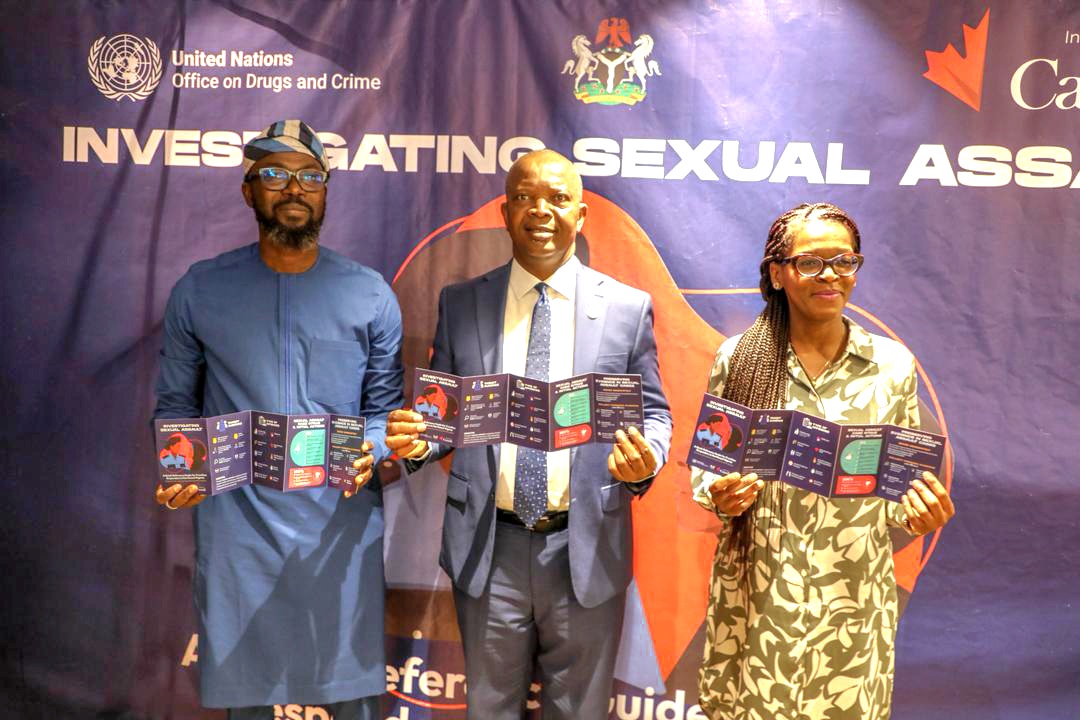
The United Nations Office on Drugs and Crime (UNODC) has introduced a new investigation guide aimed at improving the handling of sexual assault cases in North-East Nigeria, particularly in conflict-affected areas, on April 17, 2026.
The quick reference tool, known as an aide-mémoire card, is designed to support law enforcement and frontline responders in managing sexual and gender-based violence (SGBV) cases from reporting through prosecution.
Speaking at the launch in Abuja, UNODC Country Representative Cheikh Toure described the initiative as a practical step toward strengthening accountability and ensuring justice for survivors.
“This tool provides a clear, structured approach to handling cases in a safe and survivor-centred manner,” Toure said.
The guide outlines seven key steps for conducting investigations while prioritising the rights, safety and dignity of victims. It also includes referral contacts across three North-East states to facilitate access to medical, legal and psychosocial services.
Toure noted that the region continues to face significant challenges due to insurgency, displacement and widespread sexual violence affecting women and girls. He said the guide was developed to address gaps in investigation and prosecution, particularly in cases linked to terrorism.
He added that the initiative aligns with recent United Nations recommendations urging Nigeria to strengthen accountability by prosecuting offenders and improving support systems for victims.
The tool was developed in collaboration with Nigerian stakeholders and supported by the United Nations Population Fund, reflecting a coordinated effort to address SGBV.
According to Toure, it will be distributed to key institutions, including the Nigerian Police Force, the National Agency for the Prohibition of Trafficking in Persons, the military and healthcare providers.
He emphasised the role of forensic evidence in securing convictions, noting that improper handling of evidence can weaken cases.
“Accurate collection and preservation of forensic evidence are essential to achieving justice,” he said.
UNODC is also working to strengthen Nigeria’s forensic capacity by upgrading the Ngelewa Sexual Assault Referral Centre and enhancing laboratory capabilities at the Force Criminal Investigation Department in Abuja.
Toure said these efforts demonstrate a broader commitment to improving justice systems, protecting victims and reinforcing the rule of law.
He called for stronger coordination among institutions and urged stakeholders to maintain a victim-centred approach in all interventions.
Justice Obiora Egwuatu of the Federal High Court welcomed the initiative, stating that the guide would improve case management and enhance prosecution outcomes.
Similarly, Wilma Endamne, senior project manager at Global Affairs Canada, described the launch as an important milestone in addressing investigative gaps in sexual assault cases.
She expressed optimism that the tool would promote trauma-informed and rights-based investigations across the region.
Global Affairs Canada funds the project and forms part of ongoing efforts to strengthen Nigeria’s response to sexual and gender-based violence.
