




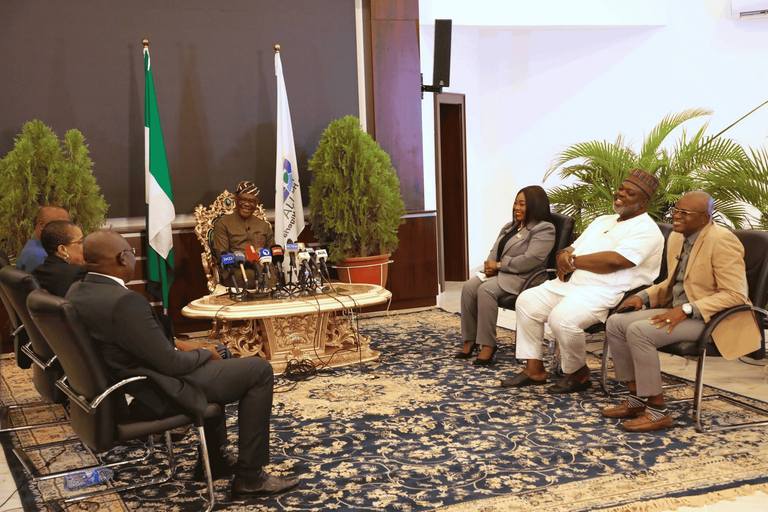
Minister of the Federal Capital Territory (FCT), Nyesom Wike, says ongoing investments in rural roads and water infrastructure across Abuja’s satellite towns are helping to reduce insecurity, improve access to farmlands and boost economic activities in underserved communities.
Wike made the remarks during his monthly live media chat in Abuja on Monday, June 1, 2026, where he highlighted key achievements of the FCT Administration and outlined plans for additional infrastructure projects scheduled for commissioning as part of activities marking President Bola Ahmed Tinubu’s third anniversary in office.
According to the minister, the administration deliberately shifted attention to rural and satellite communities after extensive consultations with local stakeholders, including traditional rulers, youth groups, women leaders and community representatives.
He explained that residents consistently identified poor road networks as a major factor contributing to insecurity, delayed emergency response and limited access to economic opportunities.
“We engaged directly with community leaders and residents to understand their challenges,” Wike said. “They pointed out that many roads were in poor condition, making it difficult for security personnel to respond during emergencies. We prioritized the roads they identified, and the results are already visible.”
The minister noted that several road projects completed in Kuje Area Council and other rural communities have improved mobility, enhanced security operations and made it easier for farmers to access agricultural lands and transport produce to markets.
He said the projects reflect the administration’s commitment to delivering practical solutions that directly impact residents rather than merely announcing policies without implementation.
“Our focus is on results. People should be able to see and feel the impact of governance, particularly in communities that have long been neglected,” he said.
Wike also announced that President Tinubu is expected to commission major water infrastructure projects in Karu and Bwari as part of the administration’s anniversary activities.
According to him, the projects are designed to improve access to potable water for residents of satellite towns and support broader efforts to close infrastructure gaps across the territory.
He emphasized that development efforts must not be limited to Abuja’s city centre.
“We cannot focus only on the city. The satellite towns deserve the same level of attention because they are home to millions of residents who contribute to the growth of the FCT,” Wike said.
The minister disclosed that additional water schemes are planned for Kuje, Orozo and Gwagwalada later this year, with the goal of expanding access to clean and reliable water supplies in rapidly growing communities.
Providing updates on transportation infrastructure, Wike listed several completed and ongoing projects across the territory.
These include the A2-Pai Road, sections of the A3 Highway, roads in the Dei-Dei area and the Bwari-Kubwa corridor.
He confirmed that the Bwari-Kubwa Road is expected to be completed before the end of the year, while construction work continues on the Abuja Airport corridor and the Zuba-Airport Road project.
According to the minister, the projects are expected to ease traffic congestion, improve connectivity between communities and support economic growth by reducing travel times.
He said infrastructure development remains one of the most effective tools for improving quality of life and attracting investment to the capital territory.
Wike’s further revealed that the FCT Administration is preparing to review the Abuja Master Plan to align it with modern urban development realities.
He said discussions with the original Japanese planners who helped design the city are scheduled for July.
“The world has changed significantly since the original master plan was developed,” he said. “Urban planning must evolve to accommodate population growth, technological advancements, and emerging development needs.”
The minister also disclosed that additional hostel accommodation is being constructed at the Nigerian Law School to improve educational infrastructure and enhance learning conditions for students.
While highlighting ongoing projects, Wike reminded residents that sustainable development requires cooperation between government and citizens.
He urged residents to fulfill their civic responsibilities by paying taxes, land charges, and other statutory fees promptly, noting that internally generated revenue remains critical to financing infrastructure development.
“Government cannot do everything alone,” he said. “Residents must support development by meeting their obligations and contributing to the growth of the territory.”
During the media session, Wike also addressed recent political developments, particularly the outcome of opposition party primaries.
He argued that disputes and allegations surrounding some opposition primaries had raised questions about claims that certain political groups represent a new democratic alternative.
According to the minister, established political parties have gained experience managing Nigeria’s complex political environment and democratic processes over time.
He also criticized frequent party defections by some political figures, arguing that political leaders should demonstrate consistency and commitment to institutional development.
Speaking on Rivers State politics, Wike defended the multi-party coalition currently operating in the state, describing it as a platform created to protect collective interests rather than individual ambitions.
He said coalition leaders are conducting consultations and are expected to agree on a consensus candidate before upcoming political contests.
The minister also reaffirmed his commitment to strengthening internal democracy within political parties and urged political leaders across the country to focus on building stronger institutions rather than engaging in divisive rhetoric.
Concluding the discussion, Wike encouraged residents, stakeholders, and media organizations to continue engaging government constructively.
He said meaningful feedback and practical suggestions often help authorities identify challenges and improve service delivery.
“Constructive criticism is important in any democracy,” he said. “When people draw attention to genuine concerns and offer solutions, government can respond more effectively.”
The minister added that collaboration between citizens and public institutions remains essential for sustaining development, improving security, and enhancing the quality of life across the Federal Capital Territory.
