



As global migration challenges become more complex, Nigeria and the Kingdom of the Netherlands are deepening cooperation on border management, institutional reforms and public service delivery, with a renewed focus on professionalism within the Nigeria Immigration Service (NIS).
The long-standing partnership between the Nigeria Immigration Service and the Kingdom of the Netherlands has received another boost following the donation of modern training and operational equipment to the NIS Hostmanship Unit, a key reform initiative designed to improve customer service and professionalism within the agency.
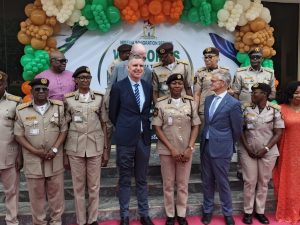
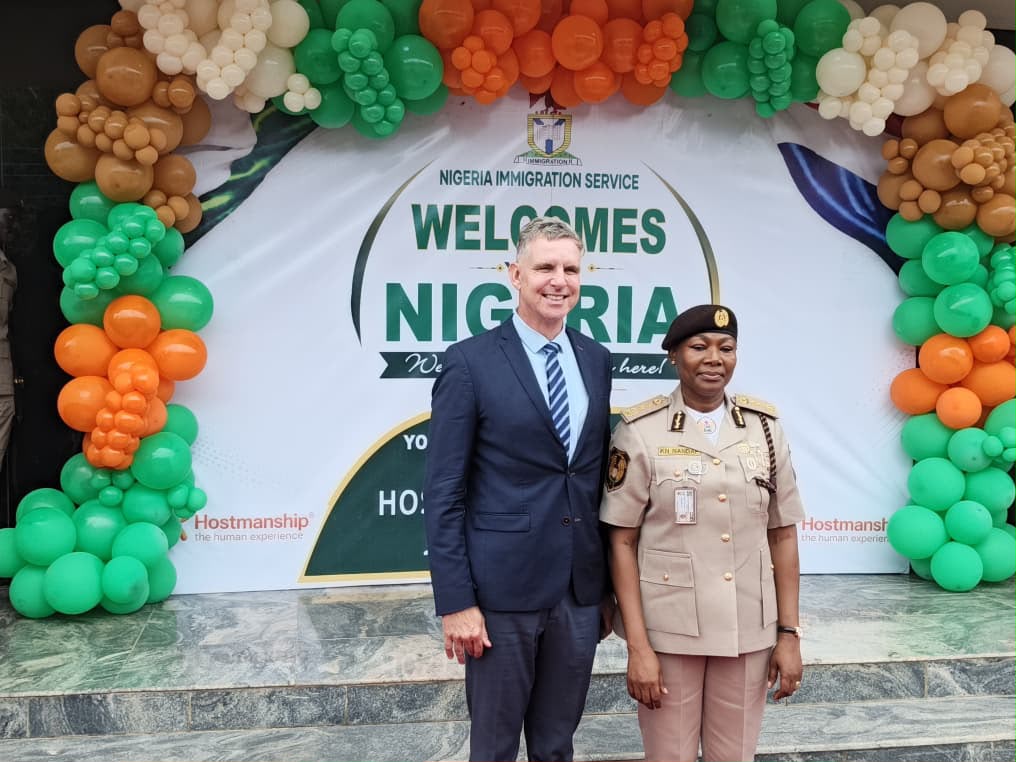
At an official handover ceremony in Abuja, Comptroller-General of Immigration (CGI) Kemi Nandap described the donation as a significant milestone in a relationship that has evolved beyond technical support into a broader collaboration focused on migration governance, institutional strengthening and improved service delivery.
The Repatriation and Departure Service donated the equipment under the Ministry of Justice and Security of the Kingdom of the Netherlands.
According to Nandap, the partnership continues to deliver measurable benefits for both countries while supporting the NIS reform agenda aimed at building a more efficient, professional and citizen-focused immigration service.
Nigeria and the Netherlands have maintained close cooperation on migration management for years, particularly in areas such as capacity building, information sharing, border management and voluntary return programmes.
As migration issues become increasingly linked to security, economic development and international cooperation, both countries have expanded their engagement to address emerging challenges.
Nandap said the relationship is founded on mutual respect, shared values and a collective commitment to strengthening migration governance.
She noted that the latest donation reflects a shared vision of creating institutions where professionalism, empathy, courtesy and excellence define interactions with the public.
“The donated equipment represents an investment in people, institutional excellence and a shared vision of transforming service delivery within the NIS,” she said.
Experts say such partnerships are becoming increasingly important as immigration agencies around the world face growing demands to balance border security with efficient and humane service delivery.
At the heart of the latest collaboration is the NIS Hostmanship Unit, an institutional reform programme designed to improve how immigration officers engage with Nigerians and foreign travellers.
Though relatively new, the initiative has emerged as one of the most visible reforms within the service.
The concept of hostmanship focuses on creating a culture of respect, professionalism, responsiveness and customer satisfaction in public institutions.
For immigration agencies, which often serve as the first point of contact for visitors entering a country, the quality of interactions can significantly influence perceptions of national institutions.
According to Nandap, the NIS has already made significant progress through structured training programmes, the development of Guest Engagement Guidelines and the deployment of certified hostmanship trainers across its formations.
The programme is gradually reshaping how officers interact with travellers while reinforcing international best practices in public service.
Observers note that improved customer service at airports and border posts can enhance Nigeria’s image, support tourism and investment, and strengthen public confidence in government institutions.
The donated equipment is expected to improve the capacity of the Hostmanship Unit by enhancing training delivery and operational efficiency.
Items handed over include a 24 KVA solar inverter system, a 20-kilowatt backup lithium battery, two 75-inch LG Smart televisions, a digital projector, a projector screen, an integrated sound system, wireless microphones, and an HP laptop computer.
Other items include solar-powered standing fans, internet connectivity equipment, window blinds, whiteboards and related training tools.
While the equipment may appear routine, Nandap stressed that the donation represents far more than physical assets.
She said the resources will help institutionalise hostmanship training across the service and ensure that reforms are sustained over the long term.
The CGI also assured the Dutch government that the equipment would be properly maintained and used to improve operational performance.
Officials from the Netherlands commended the NIS for prioritising institutional reforms and professional development.
Mr JanWillem König, who attended the event alongside Senior Policy Officer Ms Nardy Booiman, described the creation of a dedicated Hostmanship Unit as evidence of the service’s commitment to improving public service delivery.
He noted that cooperation between both institutions has been strengthened through mutual working visits, capacity-building initiatives and the signing of a Memorandum of Understanding on migration-related matters.
According to König, the Dutch authorities immediately embraced the idea of supporting the initiative because of its potential to strengthen service standards within the NIS.
He also acknowledged the role played by the Embassy of the Kingdom of the Netherlands in Nigeria in facilitating the procurement and delivery of the equipment.
For Dutch diplomats, the benefits of the programme are already becoming evident.
Mr Ronald Sonnemans, Charge d’Affaires at the Embassy of the Kingdom of the Netherlands in Abuja, described the collaboration as a strong example of the growing bilateral relationship between both countries.
He expressed confidence that the hostmanship philosophy had taken root within the Nigeria Immigration Service.
According to him, the impact can already be seen in the conduct and professionalism of immigration officers operating at Nigeria’s international airports.
Such feedback is significant because airports often serve as the first and last point of contact for visitors, making service quality an important indicator of institutional effectiveness.
The Hostmanship Coordinator of the NIS, Assistant Comptroller of Immigration Samson Thomas, said the latest donation reflects decades of cooperation between Nigeria and the Dutch Repatriation and Departure Service.
He described the partnership as one that has consistently focused on strengthening institutional capacity and improving operational effectiveness.
According to Thomas, the donated equipment symbolises more than material support.
“It represents the trust, friendship and cooperation that exist between both countries,” he said.
Analysts believe sustained international partnerships can play a critical role in helping government institutions modernise operations, adopt global best practices and improve public service outcomes.
As Nigeria seeks to modernise its immigration system and strengthen migration governance, partnerships such as the one with the Netherlands are expected to play an increasingly important role.
The latest donation may appear modest compared to large-scale infrastructure projects, but it supports a broader reform agenda focused on people, professionalism and institutional culture.
For the NIS, the challenge now lies in translating these investments into measurable improvements in customer experience, operational efficiency and public trust.
If successfully implemented, the Hostmanship Initiative could become a model for service excellence across other government agencies, reinforcing the idea that effective migration management is not only about security but also about professionalism, empathy and quality public service.
The Hostmanship Unit is a reform initiative within the Nigeria Immigration Service aimed at promoting professionalism, courtesy, empathy and excellent customer service among immigration officers.
The donation supports ongoing institutional reforms, training programmes and service delivery improvements within the Nigeria Immigration Service.
Items include solar power systems, smart televisions, projectors, internet equipment, audio systems, laptops and other training resources.
Both countries have maintained cooperation for decades through migration agreements, capacity-building programmes, information sharing and institutional partnerships,
The collaboration aims to improve immigration services, strengthen migration governance, enhance professionalism among officers and improve the experience of travellers using Nigerian borders and airports.