




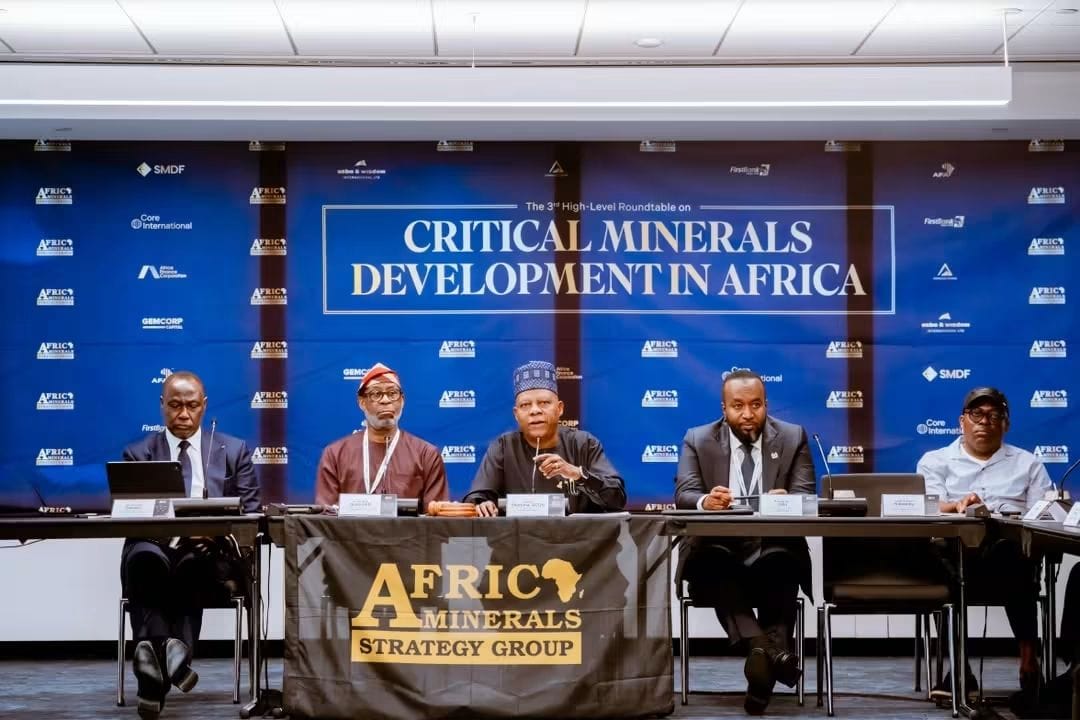
President Bola Ahmed Tinubu has called for stronger cooperation among African countries to transform the continent’s vast mineral resources into industrial wealth, urging governments to move beyond the traditional export of raw materials and invest in processing, manufacturing and technology.
Tinubu made the call in New York on Monday, September 21, 2026, while chairing the Third Africa Minerals Strategy Group (AMSG) High-Level Roundtable on Critical Minerals Development, held on the sidelines of the 81st United Nations General Assembly.
The high-level meeting, themed “From Resources to Wealth: Continental Cooperation for Mineral Value Addition, Data Sovereignty, Innovative Financing and Critical Minerals Security,” brought together African political leaders, ministers, investors, development finance institutions and other stakeholders to discuss how the continent can capture more value from its mineral resources.
Africa possesses substantial deposits of minerals that are increasingly important to global industries, including lithium, copper, cobalt, graphite, manganese and rare earth elements.
These resources are becoming more strategically important as demand grows for clean-energy technologies, batteries, advanced manufacturing, digital infrastructure and other emerging industries.
Yet the economic benefit to producing countries depends not only on the extraction of minerals but also on what happens after they are mined.
Tinubu argued that Africa must develop the capacity to process and refine its minerals locally and use them as the foundation for manufacturing, technology development, job creation and infrastructure.
“For generations, Africa has furnished the materials of prosperity elsewhere,” the President said, stressing that the continent’s mineral future should also create opportunities for African economies and communities.
His argument reflects a broader policy debate across Africa: whether mineral-rich countries can move from being primarily suppliers of raw materials to becoming competitive participants in the higher-value stages of global mineral supply chains.
According to the President, individual African countries may struggle to achieve that transformation alone.
He warned that competition among countries through lower royalties, weaker local-content requirements or excessive concessions could reduce Africa’s collective bargaining power when dealing with international investors and mineral-consuming economies.
Instead, he called for greater policy coordination, integrated markets, shared infrastructure and stronger negotiating positions.
The logic behind the proposal is that countries can potentially achieve greater industrial scale by linking their mineral resources, markets, infrastructure and investment opportunities rather than developing isolated projects.
The AMSG roundtable is part of that effort. The group, chaired by Nigeria’s Minister of Solid Minerals Development, Dele Alake, was established to strengthen cooperation among African countries on mining and mineral development. President Tinubu was elected chairman of the AMSG General Assembly in 2026, while Alake continues to chair the group’s ministerial structure.
Tinubu also pointed to Nigeria’s ongoing reforms in the solid minerals sector as an example that other African countries could study and adapt to their own circumstances.
The President said Nigeria is pursuing policies requiring greater local value addition, improved geological data, better investor access, formalisation of artisanal mining and stronger action against illegal mining.
The administration has previously reported increased revenue from the mining sector and highlighted investments in lithium processing and other mineral projects as evidence of growing activity.
The State House reported in 2025 that Solid Minerals Minister Dele Alake had linked mining-sector reforms with increased revenue, foreign investment interest, improved geological information and the formalisation of artisanal miners.
More recently, the Presidency has continued to emphasise local processing and value addition as central to Nigeria’s minerals strategy. In June 2026, Tinubu told AMSG representatives that African countries should collaborate to ensure mineral resources create jobs, technology and industrial capacity within the continent.
A major outcome of the New York roundtable was the proposed Continental Integration and Economic Assurance Declaration (CIEAD).
AMSG Chairman Dele Alake described the proposed declaration as a framework intended to provide a more coordinated architecture for Africa’s critical and solid mineral value chains.
The framework is expected to address areas including policy coordination, investment, infrastructure, financing and local value addition.
Tinubu stressed that the declaration should not remain a ceremonial document. He called for implementation arrangements with clear timelines, financing mechanisms, defined responsibilities and public accountability.
That emphasis is important because Africa has produced numerous regional economic and development commitments over the years. The practical challenge has often been translating agreements into coordinated projects, financing and measurable results.
For the minerals agenda, implementation could determine whether continental cooperation produces tangible changes in processing capacity, infrastructure and investment.
Kenya’s Minister of Blue Economy and Maritime Affairs, Hassan Ali Joho, also highlighted domestic resource mobilisation as an important driver of mineral development.
He called for greater transparency, competitiveness and alignment of licensing procedures while maintaining respect for the sovereignty of individual member states.
The emphasis on financing reflects one of the central challenges confronting Africa’s ambition to build mineral-processing industries.
Extraction projects and processing plants require substantial capital, while reliable electricity, transportation networks, ports, technology and skilled workers are also necessary to support competitive production.
For countries seeking to retain more mineral value domestically, attracting investment while establishing terms that deliver benefits to local economies will require careful policy design.
The timing of the AMSG initiative coincides with growing international competition for access to critical minerals.
As major economies seek secure supplies for energy-transition technologies, electronics, advanced manufacturing and other strategic industries, African countries have an opportunity to negotiate from a stronger position if they can coordinate their policies and develop processing capacity.
But mineral wealth alone does not guarantee broad economic development.
The outcome will depend on governance, infrastructure, investment, environmental management, community participation, technical skills and the ability of governments to ensure that mining revenues translate into wider economic opportunities.
Tinubu therefore urged AMSG members to work collectively while maintaining partnerships based on mutual benefit, sovereign equality and respect for national priorities.
The roundtable brought together representatives from countries including Liberia, Chad and Tanzania, alongside other African and international stakeholders.
For Nigeria, the initiative also provides an opportunity to position its own mining reforms within a wider continental strategy.
The message from New York was clear: Africa wants a greater share of the value generated from its minerals. The more difficult task will be turning that ambition into integrated industries, competitive businesses, quality jobs and measurable improvements in the lives of communities where the resources are found.
As the continent pursues that objective, the proposed CIEAD and the wider AMSG framework will face their most important test not at the negotiating table, but in implementation.
Frequently Asked Questions
What is the Africa Minerals Strategy Group?AMSG is a continental forum focused on strengthening cooperation among African countries on mining and solid minerals development.
What did President Tinubu propose?
He called for stronger African cooperation to increase local processing, manufacturing, technology transfer and value addition rather than relying primarily on exports of raw minerals.
What is CIEAD?
The Continental Integration and Economic Assurance Declaration is a proposed framework aimed at improving coordination around Africa’s critical and solid mineral value chains, investment and economic cooperation.
Why are critical minerals important?
Minerals such as lithium, cobalt, copper and rare earth elements are important inputs for batteries, clean-energy technologies, electronics and advanced manufacturing.
What is Nigeria doing in its mining sector?
Nigeria has been pursuing reforms focused on local value addition, improved geological data, investment, formalisation of artisanal mining and stronger action against illegal mining.
